Vrishabha (Vrisha) Rashifal — Daily Vedic Reading for the Taurus Moon Sign
The direct answer: Vrishabha (Vrisha) Rashifal — Daily Vedic Reading for the Taurus Moon Sign: Vrishabha rashifal reads the day for anyone born with the Moon between 30° and 60° of the sidereal zodiac — Taurus, ruled by Venus. Vrishabha is the single sign in which the Moon reaches its own exaltation, at 3°, and the only one that holds a graha’s high point with no graha’s fall to answer it. AskSoma publishes this at asksoma.ai/rashifal/vrishabha as a free Vedic astrology resource using Swiss Ephemeris calculations and classical Jyotish interpretation — not generic sun-sign copy.
Vrishabha rashifal reads the day for anyone born with the Moon between 30° and 60° of the sidereal zodiac — Taurus, ruled by Venus. Vrishabha is the single sign in which the Moon reaches its own exaltation, at 3°, and the only one that holds a graha’s high point with no graha’s fall to answer it.
Start with your own chart
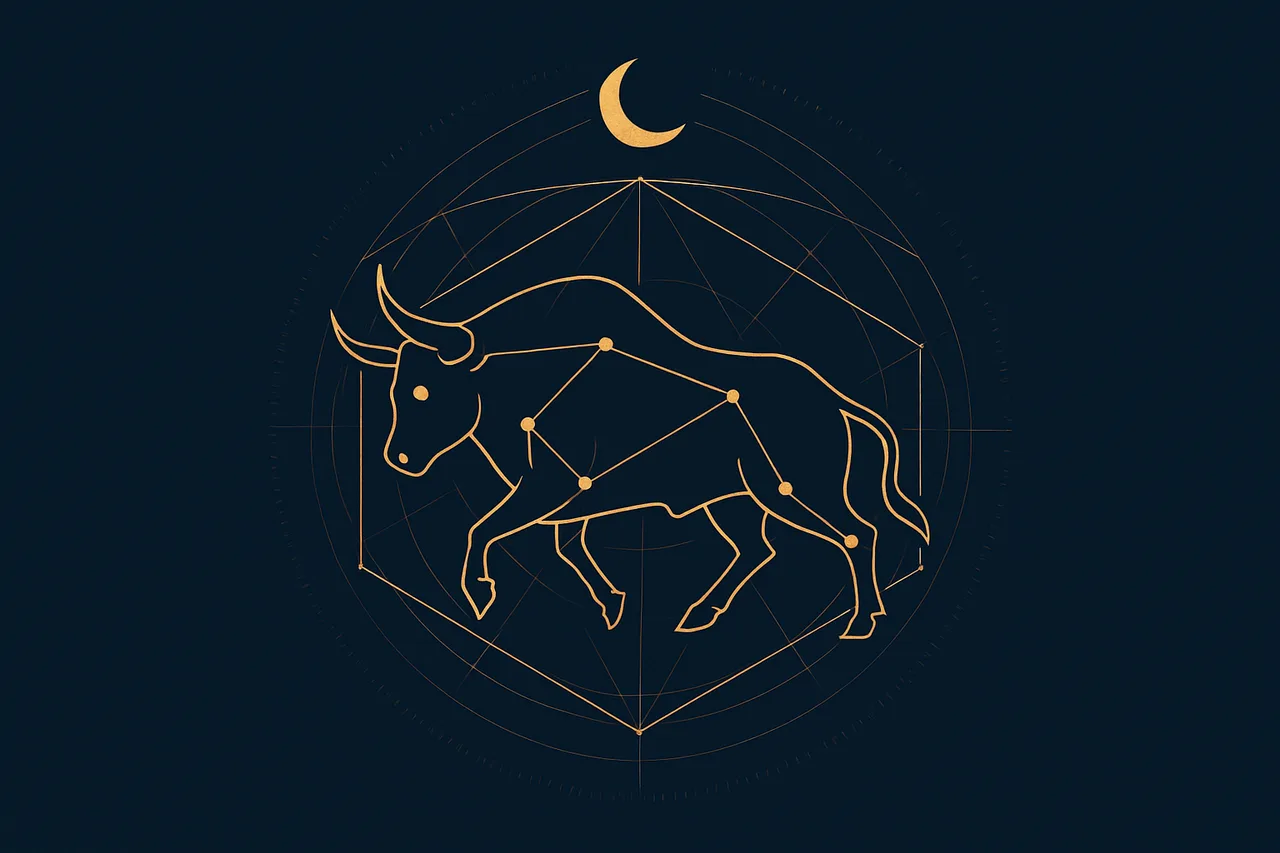
Vrishabha (Vrisha) (Taurus) · 30°–60° sidereal longitude · rashi lord Shukra (Venus) · Prithvi (Earth) · sthira (fixed)
A rashifal is read from the Moon rather than the Sun, because Jyotish treats the Moon as manas — the receiving, responsive mind. For eleven signs that is a methodological footnote. For Vrishabha it is the entire subject, because Vrishabha is where the Moon reaches its exaltation degree at 3°, with its moolatrikona following across the remaining 4°–30°. You are not reading a chart that happens to contain the Moon. You are reading the one sign the Moon is strongest in.
That produces a quality popular writing consistently gets backwards. An exalted graha is not a happier graha — it is a graha running at full capacity with nothing to blunt it. So a Vrishabha Moon registers experience at very high fidelity and then keeps it: sensory detail, tone of voice, the temperature of a room, who was kind and who was merely polite. The usual label for this is stubbornness. Structurally it is retention. The instrument is working at its ceiling and it does not discard.
There is a second structural fact, rarer than the first and almost never stated anywhere. Lay the seven classical exaltation degrees beside the seven debilitation degrees and one sign appears in the first list and in neither position of the second: Vrishabha. Mesha carries the Sun’s exaltation together with Saturn’s fall. Kanya carries Mercury’s exaltation together with Venus’s fall. Karka, Tula, Makara and Meena each pair a peak with a trough. Vrishabha carries a peak alone. Nothing inside these thirty degrees is structurally undermined — which is why this Moon sign so rarely generates crisis, and why it can sit inside an arrangement that stopped working years ago without ever classifying it as an emergency.
The three nakshatras inside Vrishabha — and how lunar this sign really is
Vrishabha runs 30°–60°, which is exactly nine padas of 3°20′ spread across three nakshatras: the closing three padas of Krittika, the whole of Rohini, and the opening two of Mrigashira. Navamsa assignments follow the sthira rule — a fixed sign begins its nine navamsas from the 9th sign, which for Vrishabha is Makara — so the column below runs Makara through Kanya in sequence. Read the lord column and this sign’s lunar saturation becomes hard to miss: Rohini is Moon-ruled and appears in no other rashi, Mrigashira’s presiding deity Soma is the Moon under a second name, and the Moon’s own exaltation degree sits inside Krittika. The spans were derived from the pada arithmetic rather than transcribed, so each boundary can be reproduced with a calculator.
Krittika
26°40′–40°00′ (pada 1 in Mesha, padas 2–4 in Vrishabha) · Pada 2 = 30°00′–33°20′ · Pada 3 = 33°20′–36°40′ · Pada 4 = 36°40′–40°00′ · Lord: Surya (Sun) · Navamsa: Pada 2 → Makara (Saturn) · Pada 3 → Kumbha (Saturn) · Pada 4 → Meena (Jupiter) · Deity Agni · symbol the blade · Mesha (sheep) yoni · Rakshasa gana
Fire at the front of an earth sign, and the only stretch of Vrishabha whose star lord is a luminary. Agni’s blade supplies this sign’s cutting edge — this is the ground on which a Vrishabha Moon can actually end something, which the rest of the sign finds close to impossible. One detail makes these three padas matter far more than their reputation suggests: the Moon’s exaltation degree, 3° Vrishabha, falls at 33° absolute, placing it inside Krittika pada 2. The zodiac’s highest lunar point therefore sits in a Sun-ruled nakshatra within a Saturn navamsa — heat and structure at the exact degree of the peak, which is a very different texture from the softness the phrase "exalted Moon" tends to conjure. Padas 2 and 3 both land in Saturn navamsas, which is why the opening of this sign reads drier, older and more self-denying than its middle.
Rohini
40°00′–53°20′ (all four padas in Vrishabha) · Pada 1 = 40°00′–43°20′ · Pada 2 = 43°20′–46°40′ · Pada 3 = 46°40′–50°00′ · Pada 4 = 50°00′–53°20′ · Lord: Chandra (Moon) · Navamsa: Pada 1 → Mesha (Mars) · Pada 2 → Vrishabha (Venus) · Pada 3 → Mithuna (Mercury) · Pada 4 → Karka (Moon) · Deity Brahma (Prajapati) · symbol the cart · Sarpa (serpent) yoni · Manushya gana
The one nakshatra lying wholly within Vrishabha, and the only Moon-ruled asterism anywhere whose sign is also the Moon’s exaltation. In the Daksha story Rohini is the star the Moon loved above the other twenty-six and would not leave, which is where both the beauty attributed to it and the curse that followed originate — and it describes the faculty accurately: Rohini attaches completely and does not move on. Brahma as deity and the cart as symbol give this sign its materialising power, the capacity to bring a thing all the way into form. Pada 2 is Vrishabha’s vargottama pada, its navamsa returning to Vrishabha itself and concentrating the sign instead of modifying it. Pada 4 — a Karka navamsa, beneath a Moon-ruled star, inside the Moon’s exaltation sign — is by any reasonable count the most lunar ground in the zodiac, and the most prone to absorbing another person’s mood as though it were information about oneself.
Mrigashira
53°20′–66°40′ (padas 1–2 in Vrishabha, 3–4 in Mithuna) · Pada 1 = 53°20′–56°40′ · Pada 2 = 56°40′–60°00′ · Lord: Mangal (Mars) · Navamsa: Pada 1 → Simha (Sun) · Pada 2 → Kanya (Mercury) · Deity Soma (Chandra) · symbol the deer’s head · Sarpa (serpent) yoni · Deva gana
The closing six and two-thirds degrees of Vrishabha, and the restless ones. Mars as star lord drives a searching heat underneath the sign’s settledness, and the deer’s head is the animal that lifts its nose and moves — the precise thing the remainder of Vrishabha refuses to do. Natives here are the Vrishabha Moons who relocate, travel and turn out constitutionally less contented than the sign’s reputation forecasts. Note the doubling that closes the sign: Mrigashira’s presiding deity is Soma, another name for the Moon, so Vrishabha exits on a second lunar signature after Rohini’s. Pada 2, in a Kanya navamsa, is the most fastidious slice of the sign and the likeliest to convert Vrishabha’s taste into open criticism.
Boundary cases deserve caution. A Moon sitting within roughly half a degree of 30°, 40°, 53°20′ or 60° should be treated as having an unsettled nakshatra until the birth time is confirmed, because lunar motion of about 13° per day works out near 0.55° per hour — so being wrong by two hours can relocate you into a different pada, and with it a different navamsa lord. That single shift alters your reading more than any transit currently in the sky. As an integrity check on the table: three padas of Krittika plus four of Rohini plus two of Mrigashira make nine, and nine multiplied by 3°20′ returns the sign’s full thirty degrees.
Venus over a Vrishabha Moon — at home, but not at its peak
Venus owns Vrishabha, and the first honest thing to say is what that does not buy you. Venus sits in swakshetra here — its own house — but its moolatrikona belongs to Tula at 0°–15° and its exaltation to Meena at 27°. Your rashi lord is therefore comfortable rather than commanding. That is the exact inverse of the arrangement in Kanya, where Mercury is exalted, moolatrikona and owner simultaneously: here it is the tenant, not the landlord, who is at maximum. Any Vrishabha reading should start from the Moon and only afterwards ask what Venus is doing, because the strength in this sign belongs to the Moon.
What Venus governs for you is also narrower than the word "love" implies. Venus is the karaka of rasa — taste, worth, sweetness, the capacity to find something worth having. Put that graha in charge of the mind and the mind evaluates by worth rather than by logic or by principle. A Vrishabha Moon does not habitually ask whether something is correct, or whether it is right. It asks whether it is worth it — of a job, a person, an argument, a purchase. That faculty is genuinely reliable. Its failure mode is that once the verdict is in, it is not reopened, because Venus has no natural instinct to re-audit and an exalted Moon has no natural instinct to let go.
Venus also owns the throat. Vrishabha governs the face, neck and voice in the Kalapurusha scheme, which is why this sign so often carries a distinctive speaking or singing voice, and why throat, thyroid and dental complaints are its recurring somatic theme rather than the joint-and-nerve pattern of an air sign. That is a classical body-mapping claim, not a diagnosis.
Venus retrograde lands differently on you than Mercury retrograde does on a Mercury-ruled sign, because Venus reverses far less often — roughly once every eighteen months, for about six weeks, against Mercury’s three times a year. When it happens your own sign lord is reversing, and for Vrishabha the flavour is re-pricing rather than miscommunication: things whose value you had settled come back up for assessment. Salaries, possessions, relationships and standards of taste are the material. In 2026 the computed picture is unusually pointed, and the transit section below gives the dates: Venus spends roughly six weeks fallen in your fifth house inside a four-month span.
One boundary, stated now so nothing later reads as advice. Venus ruling Vrishabha is a fact about your Moon sign. Whether Venus behaves as a functional benefic for you is settled by the ascendant, and those are separate questions with separate answers. For a Vrishabha ascendant Venus is the lagna lord and Saturn is the yogakaraka, holding the 9th and 10th together. Shift the rising sign to Dhanu or Mesha and the same Venus rules different houses and the verdict flips. A page that hands you a diamond because Venus rules your rashi has skipped the step that decides whether it would help.
The sky counted from Vrishabha — and the Sade Sati that has not started yet
Computed 7 August 2026, Lahiri sidereal. Slow-planet moves are given as months on purpose.
Transits mean nothing for a Moon sign unless they are counted from that sign, so every statement here is reckoned from Vrishabha rather than from an abstract house number. On the stamped date Saturn stood at 20°07′ Meena, Rahu at 6°22′ Kumbha with Ketu opposite in Simha, Jupiter exalted at 13°49′ Karka, Venus at 6°07′ Kanya and Mars at 2°50′ Mithuna.
Take Saturn first, because for Vrishabha in 2026 the Saturn news is good and temporary — an unusual pairing worth naming. Meena is your 11th, and the 11th is one of only three houses, alongside the 3rd and the 6th, where classical gochar reads Saturn as helping rather than pressing. Saturn in the 11th from the Moon is the labour-rewarded transit: gains that arrive because you kept going, older allies turning useful, income that thickens instead of spiking. Saturn stationed retrograde on 28 July 2026 and resumes direct motion on 12 December 2026, so the back half of this year is Saturn re-covering ground inside a favourable house rather than leaving it.
Now the part no generic Taurus page will tell you, and the single most important dated fact on this page. The seven-and-a-half-year Saturn cycle attaches to the three signs beginning one before your Moon — for Vrishabha that is Mesha, then Vrishabha itself, then Mithuna. Our scan puts Saturn into Mesha in June 2027, back into Meena on a retrograde pass that October, and into Mesha for good in late February 2028. So Vrishabha is not under Sade Sati now, has not been for years, gets a brief preview across the second half of 2027, and enters it properly in 2028. Set against Kumbh, which is finishing its cycle, or Kanya, whose next one is more than a decade out, Vrishabha occupies the last clear stretch before the approach. Read that as a planning window rather than a warning: the sensible move in a Saturn-in-the-11th year that runs directly into a Saturn-in-the-12th year is to bank what arrives instead of committing it forward.
Rahu and Ketu are the axis to watch for the remainder of 2026. Rahu occupies Kumbha, your 10th, with Ketu in Simha, your 4th — the nodes sitting squarely on the career-and-home axis. That reads as appetite, visibility and a willingness to be seen doing something unlike you at the professional end, set against a quiet hollowing-out of the settled, domestic, property-and-mother end. For a fixed earth sign whose founding instinct is to hold the ground it stands on, Ketu in the 4th is the more disruptive half, and it usually presents as a house, a city or a family arrangement gradually ceasing to feel like home rather than as a rupture. The axis shifts in early December 2026, taking Rahu to Makara, your 9th, and Ketu to Karka, your 3rd.
Jupiter is the honest disappointment on this list, and glossing it would be the easy option. Jupiter is exalted in Karka, which is as strong as Jupiter gets — but Karka is your 3rd, and classical gochar counts Jupiter as favourable from the Moon only through the 2nd, 5th, 7th, 9th and 11th. The 3rd is not among them. The strongest Jupiter of the decade is therefore parked in a house where its transit delivers least to you specifically. It moves to Simha, your 4th, in November 2026 — unfavourable by the same rule — retreats to Karka in January 2027, and does not reach a supportive house from your Moon until it enters Kanya, your 5th, around November 2027. If exalted Jupiter has felt oddly unproductive for you while everyone insisted it was excellent, that arithmetic is the reason.
Finally your own rashi lord, which carries the sharpest short-term signal here. Venus entered Kanya — its sign of fall — on 2 August 2026, and Kanya is your 5th. It departs for Tula on 3 September, then reverses back into Kanya on 5 November and remains until 24 November. So the lord of your Moon sign spends something like six weeks of 2026 debilitated, inside your house of creativity, romance, speculation and inherited intelligence. The lived version is not misfortune. It is that your valuation faculty — the thing you rely on most — runs unreliably in precisely the domain where you trust it hardest. Slow down creative commitments and speculative money through those two windows, and assume that whatever looks worthless in early November will look different by December.
Friday, the Venus hora, and what Rohini is actually for
Your weekday is Shukravar, Friday, on Venus’s rulership — which Tula shares, so the day by itself is not a Vrishabha instrument. The hora is. Friday’s first hora after sunrise belongs to Venus and recurs every seventh hour thereafter in the Chaldean order, and AskSoma’s own hora table glosses a Venus hour as the window for love, art, luxury purchases and socialising. For a Vrishabha Moon the sharper use is narrower than any of those. A Venus hora is the right hour for deciding what something is worth: setting a price, agreeing a salary, valuing a possession, or finally saying aloud what a relationship is actually worth to you. Blanket claims that Friday is auspicious for Taurus waste the one timing instrument that genuinely fits the sign.
For devotional practice, Vrishabha offers an anchor that matches its structure unusually well, and that anchor is Rohini. Rohini falls inside this sign and inside no other, its presiding deity is Brahma — Prajapati, the maker of forms — and its symbol is the cart, the vehicle that carries a harvest home. For a sign whose whole faculty is materialisation, bringing something out of idea and into a form you can keep, that fit is exact, and traditional Rohini observance centres on making and offering what has been grown rather than on petition. Krittika, which opens the sign, supplies the counterweight: Agni is its deity and a blade its symbol, and the classical use of that stretch is severance — cutting away what has been carried too long, which is the discipline a retentive Moon needs most and chooses least. Both are named here as devotional tradition, which is what they are.
On gemstones you get the whole answer rather than the flattering half. Diamond belongs to Venus and Venus rules Vrishabha, which is where the usual recommendation originates. But a stone amplifies whatever a planet already does for your ascendant, and the ascendant is not the Moon sign. Should Vrishabha also be your rising sign, the standard Parashari grading behind AskSoma’s remedy engine makes Venus a functional benefic as lagna lord and Saturn the yogakaraka, holding the 9th and the 10th — which is why blue sapphire, the stone people are most often warned away from, ranks among the strongest for a Vrishabha ascendant. That same table classifies Jupiter, Mars and, notably, the Moon as functional malefics for this lagna. Sit with the last one for a moment on a page about a Moon sign: the graha exalted in your rashi can be functionally unhelpful to your ascendant, and those are not contradictory findings but answers to two different questions. Amplifying a functional malefic is the classic way to make a chart worse on purpose. Knowing your Moon sign alone leaves the grading impossible, and saying so is more useful to you than a recommendation would be.
The lordship map from Vrishabha — Saturn holds your ninth and your tenth together
Where the planets stand is one question. Who owns the ground they stand on is the other, and it does not change with the date.
Count nine from Vrishabha and you land on Makara; count ten and you land on Kumbha. Both belong to Saturn, and no other rashi puts his two signs on precisely that pair. The 9th is dharma, fortune, the father, the teacher; the 10th is the work the world sees. Having one graha over both is the configuration classical texts single out for a Vrishabha ascendant, where Saturn is named yogakaraka — and the honest footnote is that yogakaraka is a lagna judgement, not a Moon-sign one, so this page can show you the structure and not grade it. What the structure means for a Moon sign is plainer and still worth having: for you, belief and occupation are not separable. Work that violates the principle does not merely disappoint, it destabilises, because both houses answer to the same slow, uncompromising planet.
The second fact is less comfortable and gets almost no coverage. Venus owns Vrishabha and it owns Tula, and Tula is your 6th — illness, debt, service, the people you are obliged to. So the graha of ease and value also runs the department of obligation. Vrishabha shares that shape with Vrishchika, where Mars does the same across the 1st and 6th; it is not unique, but the flavour is, because Venus is a benefic doing a malefic house’s work. The practical reading is that this sign accumulates obligation the way it accumulates everything else — comfortably, gradually, and without noticing until the total is large. The remaining pairs: Mercury on the 2nd and 5th, Mars on the 7th and 12th, Jupiter on the 8th and 11th.
Set that against the sky computed for this page. Venus itself was at 6°06′ Kanya on 7 August 2026 — in its own debilitation, in your 5th, while owning your 1st and your 6th. The graha your whole sign depends on was at its structural floor and in charge of both the self and the burden at once; that is the most Vrishabha-specific thing in the snapshot and it is not visible in any statement about where planets are. Meanwhile Saturn, holding your 9th and 10th, was retrograde in your 11th, and your 6th, 7th, 8th, 9th and 12th carried nothing slow at all.
Vrishabha, Taurus, and why your Sun sign probably does not match
Vrishabha — also written Vrisha or Vrishabh — is Taurus. The Sanskrit names the bull, and specifically the yoked working animal rather than the charging one: the beast whose worth is that it pulls the same furrow to the end of the field. That image carries the sign better than the adjectives usually bolted onto it in English. Vrishabha is not fundamentally about placidity. It is about sustained draught.
Confusion starts at the calendar, so take it on its own. Jyotish works in the sidereal zodiac on the Lahiri (Chitra-paksha) ayanamsa, and our computation puts the Sun in sidereal Vrishabha from 16 May to 15 June in 2026, drifting about a day across years. Western practice works in the tropical zodiac, where Taurus runs roughly 20 April to 20 May. Roughly twenty-four days separate them. Neither framework has made a mistake — the offset is precession, which one zodiac follows and the other deliberately ignores, and it grows by about a degree every seventy-two years. That offset is why so many lifelong Western Taureans compute as Mesha once a Vedic chart is cast, and why someone born in the first fortnight of June can turn out to be sidereal Vrishabha having never once been called a Taurus.
Then the distinction that matters more, and to which none of those dates apply. In Indian usage "Vrishabha rashi" refers to the position of your MOON at birth, not your Sun. This entire page is written for that Moon, because that is what rashifal means by rashi and it is the reference point every transit above is counted from. The Moon crosses a sign roughly every two and a quarter days, which is exactly why no calendar range can ever hand it to you: it takes your birth date, and for the pada your birth time as well. Arriving here knowing only that you are "a Taurus" leaves the question genuinely open — about one Western Taurus in twelve turns out to hold this Moon. Compute it rather than read a page belonging to somebody else’s Moon.
Where the slow planets stand, counted from Vrishabha
Positions computed 7 August 2026 on the Lahiri ayanamsa. The verdict column applies classical gochar read from the Moon — Saturn helping in the 3rd, 6th and 11th; Jupiter helping in the 2nd, 5th, 7th, 9th and 11th — which is how an exalted Jupiter ends up badly placed for you while a retrograde Saturn is doing you good.
| Graha | Sign & degree | House from Vrishabha | Gochar verdict | Next move |
|---|---|---|---|---|
| Saturn | Meena 20°07′, retrograde | 11th | Favourable — one of Saturn’s three good gochar houses. Gains through persistence, older allies, income that consolidates. | Direct 12 Dec 2026. Enters Mesha — your 12th, opening Sade Sati — June 2027. |
| Rahu | Kumbha 6°22′ | 10th | Amplifying. Visibility, ambition and out-of-character professional moves; reputation running ahead of substance. | To Makara, your 9th, early December 2026. |
| Ketu | Simha 6°22′ | 4th | Emptying. Home, land and the settled base lose their grip — the harder half of the axis for a fixed earth sign. | To Karka, your 3rd, early December 2026. |
| Jupiter | Karka 13°49′, exalted | 3rd | Unhelpful by transit despite the exaltation: maximum strength standing in a house where Jupiter’s gochar delivers least. | Simha (4th, also unhelpful) Nov 2026; back to Karka Jan 2027; reaches Kanya, your 5th, around Nov 2027. |
| Venus — your rashi lord | Kanya 6°07′, debilitated | 5th | Your own sign lord fallen, in the house of creativity, romance and speculation. Valuation runs unreliably where you trust it most. | To Tula 3 Sep 2026, then back into Kanya 5–24 Nov 2026. |
Slow-planet moves are quoted as months because the fast engine behind them resolves signs, not arc-seconds, and each crossing carries about a day either side. Anyone reading this after the computed-on date above should treat the table as a record of that day and take live figures from the panel instead.
Where today's sky lands for a Vrishabha (Vrisha) Moon
- Work
- 10th from Vrishabha = Kumbha, ruled by Saturn — Rahu transiting there through 2026
- Your house of standing is Kumbha, which hands your career to Saturn rather than to Venus — and that split is why so many Vrishabha natives feel their working life and their inner life run on separate weather systems. Venus governs the mind; Saturn governs the reputation. The gap closes slowly and pays for tenure: this sign does its strongest professional work in roles where remaining is itself the qualification. On 7 August 2026 Rahu sits at 6°22′ Kumbha inside that 10th house, lifting visibility and appetite well above the sign’s baseline — a Vrishabha native who made an uncharacteristically bold career move across 2025–26 was being transited rather than becoming someone else. Rahu departs for your 9th in early December 2026, and whatever had genuine substance under the noise is what stays.
- Money
- 2nd from Vrishabha = Mithuna (Mercury); 11th = Meena (Jupiter), carrying Saturn through 2026
- Vrishabha is the natural second sign of the zodiac, so this Moon carries a 2nd-house signature in the 1st: value, storage and possession get read as identity rather than as arithmetic. The actual 2nd house is Mithuna under Mercury, which makes accumulation more negotiated and more verbal than the sign’s reputation predicts — Vrishabha earns by agreeing terms well, not by grinding. Gains, the 11th, fall in Meena under Jupiter, and Saturn is transiting there through 2026 in one of its three helpful gochar positions. The read for this year is unglamorous and unusually clear: income thickens rather than spikes, and the correct response is to bank it. Saturn crosses into your 12th during 2027, and a fixed earth sign that has already committed its gains forward into fixed costs is precisely the profile that finds the next cycle expensive.
- Relationships
- 7th from Vrishabha = Vrishchika (Mars) — the sign of the Moon’s fall, opposite the sign of its exaltation
- This is the most structurally loaded partnership axis in the zodiac, and it belongs to Vrishabha alone. Your 7th is Vrishchika, and Vrishchika is where the Moon debilitates — so the sign holding your Moon at its highest looks straight across at the sign holding it at its lowest. A Vrishabha Moon is drawn, reliably and across a lifetime, toward people operating at the emotional register where your own instrument is weakest: intense, private, transformative, unwilling to be reassured. That is neither a warning nor a compatibility verdict. It is the shape of the axis, and it explains why partnership for this sign tends to be the arena of real change rather than of comfort, whatever the reputation says. Mars ruling that 7th also means conflict arrives faster and hotter than a Venus-governed mind is calibrated for, and Ketu’s occupation of your 4th until December 2026 compounds it by loosening the domestic ground underneath.
- Health
- Vrishabha governs the face, neck and throat in the Kalapurusha; 6th from Vrishabha = Tula, also Venus-ruled
- The Kalapurusha assigns Vrishabha the face, neck, throat and voice, which is why throat, thyroid, dental and voice complaints form this sign’s recurring somatic theme instead of the joint-and-nerve pattern belonging to the air signs. Kapha accumulation is the constitutional tendency — an earth sign under Venus, the most kapha-building of the grahas — so the useful direction is movement and lightness, which is the opposite of what the sign instinctively reaches for. One structural twist deserves naming: your 6th house of illness is Tula, also under Venus, so a single graha governs both your mind and your disease pattern. That links indulgence and ill-health more directly for Vrishabha than for signs whose 6th lord differs from their rashi lord. A real throat symptom belongs to a doctor, and nothing on this page is a diagnosis.
Vrishabha (Vrisha) rashifal — frequently asked
Is Vrishabha rashi in Sade Sati right now?
Not in 2026, and not for a while yet. The cycle attaches to Saturn’s passage through the sign before your Moon, your Moon sign itself, and the sign after — for Vrishabha that means Mesha, Vrishabha and Mithuna. On 7 August 2026 Saturn stands at 20°07′ Meena, your 11th, which is one of the three houses where classical gochar reads Saturn as actively helping. Our scan puts Saturn into Mesha in June 2027, back into Meena on a retrograde pass that October, and into Mesha for good in late February 2028. Vrishabha therefore gets a short preview across the back half of 2027 and begins the cycle properly in 2028, which makes 2026 the last unobstructed year before the approach — a reason to consolidate, not a reason to worry. Anyone selling a Vrishabha native Sade Sati remedies today has the year wrong.
Why is the Moon exalted in Vrishabha and what does it actually mean?
Classical texts fix the Moon’s exaltation at 3° Vrishabha, with its moolatrikona continuing across 4°–30° of the same sign — which makes the Moon the only graha whose exaltation and moolatrikona both fall in a sign it does not own. Exaltation is not a promise of comfort. It describes a graha operating at full capacity with nothing structurally damping it, and for this Moon sign that surfaces as very high retention: sensory detail, emotional tone and old grievances all held at identical fidelity, with no instinct to discard. Worth knowing too is where that degree actually lands — 3° Vrishabha sits inside Krittika pada 2, a Sun-ruled nakshatra in a Saturn navamsa. The zodiac’s lunar peak rests on fire and structure rather than on softness.
Which nakshatras fall in Vrishabha rashi?
Three, of which only one lies entirely inside the sign. Krittika supplies padas 2, 3 and 4, spanning 30°00′–40°00′ under the Sun with Agni as deity. Rohini supplies all four padas, 40°00′–53°20′, under the Moon with Brahma as deity — the only complete nakshatra in Vrishabha, and the only Moon-ruled asterism anywhere sitting in the Moon’s own exaltation sign. Mrigashira supplies padas 1 and 2, spanning 53°20′–60°00′ under Mars with Soma as deity, its remaining padas crossing into Mithuna. Three plus four plus two gives nine padas, and nine at 3°20′ apiece accounts for the sign’s thirty degrees exactly. Rohini pada 2 is Vrishabha’s vargottama pada, where the navamsa returns to Vrishabha itself.
Is Rahu exalted in Vrishabha?
Some schools hold that, and pretending the matter is settled would be dishonest. Parashara gives the nodes no exaltation sign whatsoever. One widely used later tradition assigns Rahu’s exaltation to Vrishabha and Ketu’s to Vrishchika; another, equally established, assigns Rahu to Mithuna and Ketu to Dhanu. Because the traditions genuinely conflict, "exalted Rahu in Taurus" is best treated as one school’s reading rather than as a fact about your chart, and nothing on this page depends on resolving it. More useful and not in dispute: Rahu is transiting Kumbha, your 10th, until early December 2026, and a node in the 10th from the Moon amplifies visibility and ambition whichever exaltation scheme you follow.
Should I wear a diamond because Venus rules Vrishabha?
Not for that reason. Venus ruling your rashi describes your Moon sign; whether Venus operates as a functional benefic is settled by your ascendant, which requires a birth time. Where Vrishabha is also the rising sign, the standard Parashari grading makes Venus a functional benefic as lagna lord and Saturn the yogakaraka, holding your 9th and 10th together — which puts blue sapphire, of all stones, among the strongest choices for a Vrishabha ascendant, while classifying Jupiter, Mars and even the Moon as functional malefics for it. That last point rewards a pause on a Moon-sign page: the graha exalted in your rashi can be functionally unhelpful to your lagna. Because a gemstone amplifies whatever a planet already does for the ascendant, strengthening a functional malefic is the reliable way to make matters worse, so establish the rising sign before anybody sells you a stone.
What this page can NOT tell you
- Everything above describes a transit as it falls on roughly one person in twelve alive, all of whom share this Moon sign with you. Saturn really is in the 11th from every Vrishabha Moon today. Which part of your life that touches depends on where Meena sits in YOUR chart and what you hold there natally, and answering that requires a birth time this page does not have.
- Only the Moon is read here — not the ascendant, not the Mahadasha, not a single house placement. For Vrishabha that gap carries a sting the sibling pages do not share: the Moon exalted in your rashi is graded a functional malefic for a Vrishabha ascendant. Both statements hold, because they answer different questions, and knowing your Moon alone cannot tell you which one is governing your year.
- Your pada shapes the reading more than your sign does, and it is unknowable from a date. Krittika pada 2 — Sun star lord, Makara navamsa, Agni’s blade — and Rohini pada 4 — Moon star lord, Karka navamsa, Brahma’s cart — run noticeably different software inside identical thirty degrees. Approximate birth times should go through the birth time finder before any pada-level claim is trusted, ours included.
- The transit statements carry a date stamp of 7 August 2026 and the sky has moved since. On our calculation the nodal axis shifts in early December 2026, Jupiter enters Simha that November and retreats to Karka in January 2027, Saturn resumes direct motion on 12 December 2026, and Saturn reaches Mesha in June 2027. Each of those crossings carries about a day of slack in the fast engine that produced it, which is why months appear here instead of moments.
- Rahu’s exaltation sign is contested and this page will not pretend otherwise. Vrishabha and Mithuna are each defended by established paramparas, and Parashara awards the nodes no exaltation at all. Nothing above rests on settling it, and it is marked as disputed rather than quietly decided.
- No claim here is medical, legal or financial guidance, and no honest Jyotish reading declares an outcome certain — what gets described are windows and pressures. That caveat carries extra weight for a Moon that retains what it takes in: a sentence about your throat or your savings will be held far longer, and far more literally, than it was written. What happens inside a window is not a thing the chart contains.
Every position quoted is sidereal on the Lahiri (Chitra-paksha) ayanamsa. The transit figures, Saturn’s two 2026 stations, the Venus debilitation windows and the sidereal Sun dates all come from a computation run on 7 August 2026, with slow-planet crossings reported at month resolution because that is the honest resolution of the fast module behind them — the panel on this page pulls arc-second figures from the full engine instead. The nakshatra table was generated from the pada arithmetic rather than transcribed by hand: nine padas of 3°20′ per rashi, with the sthira rule starting Vrishabha’s navamsas from Makara. Claims drawn from tradition — the Moon’s exaltation at 3° and moolatrikona across 4°–30° of this sign, Venus owning it without holding moolatrikona here, the nakshatra lords and deities, and the gochar rules reckoned from the Moon — rest on Brihat Parashara Hora Shastra. The Vrishabha-ascendant functional grading is the standard Parashari classification driving AskSoma’s own remedy gate. Where paramparas genuinely conflict, as they do over Rahu’s exaltation, the disagreement is stated on the page instead of being resolved out of sight.
How AskSoma computes and what we refuse to claim · Engine: Swiss Ephemeris for full birth charts; a lightweight truncated-series module for this page’s transit statements and its live sky panel. · Ayanamsa: Lahiri (Chitra-paksha) — the Rashtriya Panchang standard. · Content reviewed 2026-08-07 · Transit positions computed for 2026-08-07
What people rate AskSoma
4.8/5 from 100+ reviews on the selected public wall; 4.5/5 on Trustpilot from 16 reviews; 9.6/10 average across 286 selected satisfaction responses. Figures as of 2026-06-25. Satisfaction is not Net Promoter Score.
About the author
Written by Savan Vyas, founder of AskSoma.
The astrology is not written from memory: every chart position, dasha period and panchang timing AskSoma shows is computed with the Swiss Ephemeris on the Lahiri (Chitrapaksha) ayanamsa. How we calculate.