Mesh (Mesha) Rashifal — Daily Vedic Reading for the Aries Moon Sign
The direct answer: Mesh (Mesha) Rashifal — Daily Vedic Reading for the Aries Moon Sign: Mesh rashifal is the daily reading for anyone whose Moon sat between 0° and 30° sidereal at birth — Aries, ruled by Mars. Mesha is the only sign holding both the Sun’s exaltation at 10° and Saturn’s debilitation at 20°. Saturn has been in the 12th from Mesha since April 2025 — the opening phase of Sade Sati. AskSoma publishes this at asksoma.ai/rashifal/mesh as a free Vedic astrology resource using Swiss Ephemeris calculations and classical Jyotish interpretation — not generic sun-sign copy.
Mesh rashifal is the daily reading for anyone whose Moon sat between 0° and 30° sidereal at birth — Aries, ruled by Mars. Mesha is the only sign holding both the Sun’s exaltation at 10° and Saturn’s debilitation at 20°. Saturn has been in the 12th from Mesha since April 2025 — the opening phase of Sade Sati.
Start with your own chart
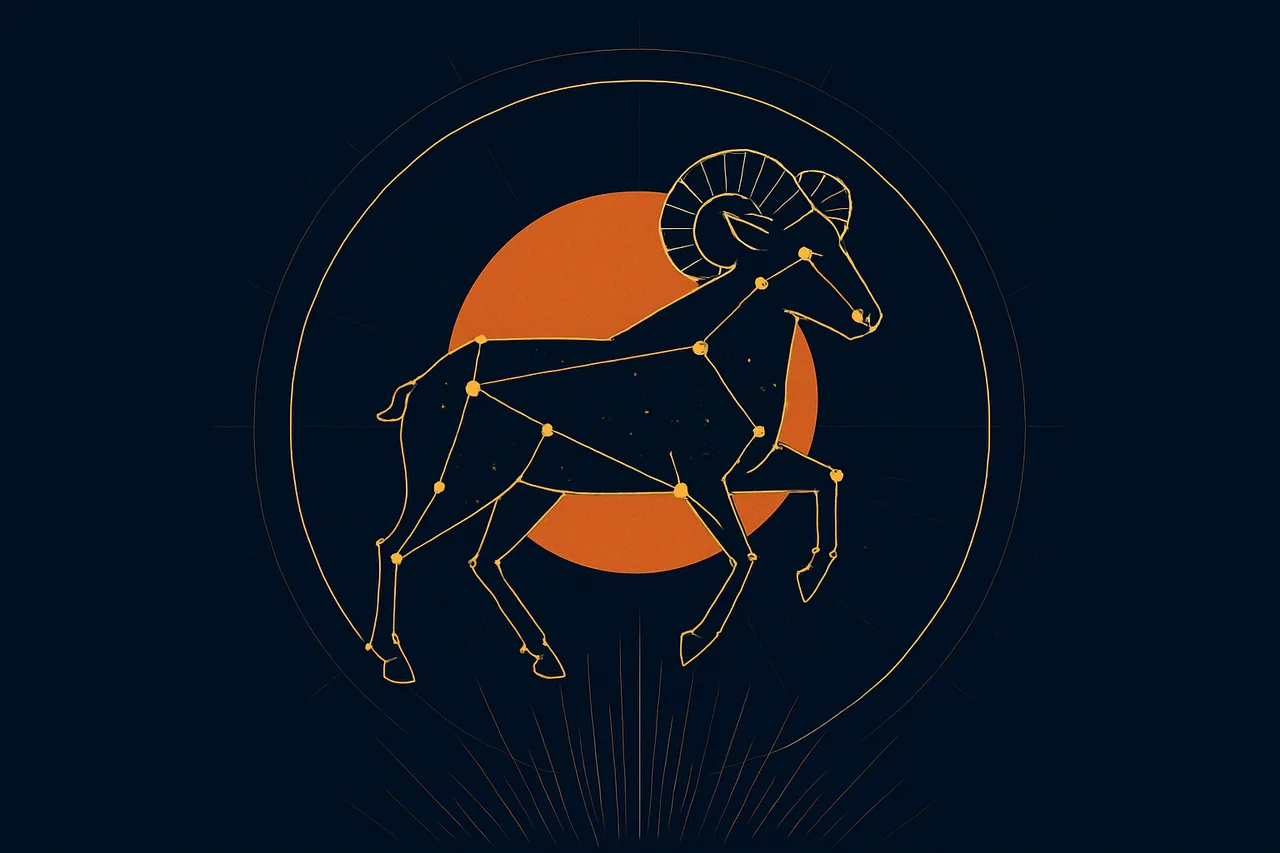
Mesh (Mesha) (Aries) · 0°–30° sidereal longitude · rashi lord Mangal (Mars) · Agni (Fire) · chara (movable) · Kshatriya varna
Start with what a rashifal actually reads, because for Mesha the answer changes the content. The input is the Moon — specifically the sign it stood in at your birth, which Jyotish calls the janma rashi and treats as the seat of manas, the reactive mind. It is not the Sun, and the popular picture of "Aries" was assembled almost entirely from Sun-sign writing about identity and will. A Mesha Moon is a different instrument: not a loud personality but a fast processor, where the reaction completes before the deliberation begins and the deliberation then has to catch up to a position already taken. That lag — between having reacted and having decided — is the thing Mesha natives actually live with, and no Sun-sign page describes it.
The structural reason sits in the sign’s dispositor. Mars owns Mesha and holds moolatrikona across its first twelve degrees (Brihat Parashara Hora Shastra), so a Mesha Moon is never handed a weak lord by sign. But — and this is where Mesha parts company with the other signs whose lord is comfortable at home — Mars reaches its actual ceiling somewhere else entirely, exalted at 28° Makara, in Saturn’s earth sign. Your rashi lord is at home in your sign and at its best in a stranger’s. Read plainly, that is a mind whose native setting is initiation and whose highest performance arrives under constraint, structure and someone else’s timetable. Mesha natives who have noticed they do their best work with a hard deadline and a boss they mildly resent are describing this, not a character flaw.
The second structural fact is the one no generic Aries page mentions, and it is checkable in ten seconds. Mesha holds the Sun’s exaltation degree at 10° and Saturn’s debilitation degree at 20° — the two natural antagonists of the graha family reaching opposite extremes ten degrees apart inside one thirty-degree sign. Only Tula carries the mirror of that arrangement (Saturn exalted at 20°, Sun fallen at 10°); no other sign holds this particular pair at all. What it produces is the recognisable Mesha shape: authority, visibility and self-assertion run hot here, while patience, delay and consequence run cold. Mesha does not lack discipline as a trait. Mesha is a place where the planet of discipline is structurally at its weakest.
The three nakshatras inside Mesha — and where the sign’s two extreme degrees actually land
The split across Mesha is unusually clean: all four padas of Ashwini, all four of Bharani, then Krittika’s opening pada, with Krittika’s other three crossing the boundary into Vrishabha. Two whole nakshatras plus a quarter, which is what a rashi starting on a nakshatra boundary produces. Because Mesha is a chara (movable) sign the classical rule starts its navamsa count from the sign itself, so the opening 0°00′–3°20′ is vargottama and repeats Mesha in the navamsa. Nothing in the table below is asserted — the boundaries are 3°20′ multiples and you can rebuild every one of them with division.
Ashwini
0°00′ – 13°20′ (all four padas in Mesha) · Pada 1 = 0°00′–3°20′ · Pada 2 = 3°20′–6°40′ · Pada 3 = 6°40′–10°00′ · Pada 4 = 10°00′–13°20′ · Lord: Ketu · Navamsa: Navamsas 1–4: Mesha (vargottama, Mars) → Vrishabha (Venus) → Mithuna (Mercury) → Karka (Moon) · Ashwa (horse) yoni · Deva gana · Adi nadi
The zodiac opens here, and it opens under Ketu — the first nakshatra of the 27 is ruled by a shadow graha, which is why a Mesha Moon born in Ashwini begins life in a Ketu mahadasha under the Vimshottari sequence. Deity: the Ashwini Kumaras, the twin physicians. The signature is speed applied to rescue: first responder, first draft, first to notice something is wrong. Pada 1 is vargottama, the most concentrated Mesha in the zodiac and the least diluted by any other sign. The Sun’s exaltation degree, 10°00′, is the exact boundary between padas 3 and 4 — so a Mesha Moon in late Ashwini sits directly on the point where the Sun is strongest in the whole 360°.
Bharani
13°20′ – 26°40′ (all four padas in Mesha) · Pada 1 = 13°20′–16°40′ · Pada 2 = 16°40′–20°00′ · Pada 3 = 20°00′–23°20′ · Pada 4 = 23°20′–26°40′ · Lord: Shukra (Venus) · Navamsa: Navamsas 5–8: Simha (Sun) → Kanya (Mercury) → Tula (Venus) → Vrishchika (Mars) · Gaja (elephant) yoni · Manushya gana · Madhya nadi
Venus ruling a nakshatra inside Mars’s fire sign, with Yama — the god who sets the limit — as its deity. This is the stretch of Mesha that carries restraint rather than ignition, and it costs something: Bharani natives characteristically hold a great deal in before releasing it. Saturn’s debilitation degree, 20°00′, is the exact boundary between padas 2 and 3, which means the sign’s weakest point for patience and its Venus-ruled nakshatra of endurance occupy the same ground. Pada 4, in a Vrishchika navamsa, hands the pada back to Mars in his water sign — the most intense and least visible slice of Mesha.
Krittika
26°40′ – 40°00′ (pada 1 in Mesha, padas 2–4 in Vrishabha) · Pada 1 = 26°40′–30°00′ · Lord: Surya (Sun) · Navamsa: Navamsa 9: Dhanu (Jupiter) — the sign’s last division · Mesha (ram) yoni · Rakshasa gana · Antya nadi
The final 3°20′ of the sign, and the only pada here whose star lord is a luminary. Krittika’s deity is Agni and its symbol is the blade — cutting and purification rather than launching. Note the detail that makes this pada distinctly Mesha’s: its classical yoni is the Ram, the sign’s own animal, appearing for the first and only time exactly as the sign runs out. A Mesha Moon in Krittika pada 1 reads as the most self-critical and the most finishing-oriented of the nine, and the Dhanu navamsa gives it a moral frame the rest of the sign does not automatically carry.
Mesha packs all three ganas (Deva, Manushya, Rakshasa) and all three nadis (Adi, Madhya, Antya) into just three nakshatras, which matters directly in traditional matchmaking, where both are scored. One caution on the boundaries: 0°, 13°20′, 26°40′ and 30° are the seams, and the Moon covered about 14.45° on the day this page was computed — call it 0.6° per hour. Land within half a degree of a seam and a two-hour error in your recorded birth time is enough to relocate you into the next pada, taking the navamsa lord with you. That is a larger change to your reading than any transit on this page.
Mars as the lord of a Mesha Moon — what it governs, and what its cycles do
Mars over the Moon is a specific pairing, not a generic "energy" statement. The Moon is manas — reception, mood, the part of you that responds before you choose to. Mars is kriya: initiative, heat, defence, the impulse to act on a boundary. Put Mars in charge of the receptive mind and the response arrives already converted into action. A Mesha Moon does not feel slighted and then decide what to do; the deciding and the feeling are the same event. This is why Mesha natives are so often described as reacting disproportionately by people who did not see the first 400 milliseconds, and why Mesha natives themselves frequently report being surprised by their own reply.
Dignity matters here and it is easy to overstate. Mars owns Mesha and, by the Parashari reckoning, holds moolatrikona from 0° to 12° with own-sign strength across the remaining eighteen. So the dispositor of a Mesha Moon is strong by sign, and whatever weakens it has to come from elsewhere — the house it occupies, what aspects it, proximity to the Sun, or the dasha you happen to be running. What Mars does NOT get in Mesha is exaltation — that belongs to 28° Makara. The practical consequence is worth sitting with: the sign is a natural starting mechanism and a poor finishing one, because the placement that makes Mars best at seeing something through is in the sign of Saturn, not here. Mesha initiates at full strength and completes at own-sign strength. The gap between those two numbers is the whole story of the abandoned project.
Mars retrograde is the cycle to watch, and it is rarer than most people assume. Mars turns retrograde roughly every 25 to 26 months — not three times a year like the inner planets — so a Mesha Moon spends most of its life with its own lord moving forward. On our calculation Mars does not retrograde at all during 2026: it runs direct through the entire year, and its next station is in January 2027 in Simha, turning direct again in early April 2027 in Karka. That second detail is the sharp one, because Karka is Mars’s sign of debilitation — so the station where Mars recovers its forward motion happens while Mars is in fall. For a Mesha Moon, that is the ruler of your mind stopping, reversing and restarting inside its weakest sign, and the honest reading is that decisions taken in that window will feel unusually final and are unusually likely to be revisited.
Combustion is the other Mars cycle, and it behaves differently from Mercury’s. Because Mars is a superior planet moving slowly relative to the Sun, its combustion lasts months, not days. On our scan Mars is not combust at any point in 2026 or 2027; it enters the classical 17° orb of the Sun in early January 2028 and does not clear it until around June 2028. A Mesha Moon reading forecasts across the next two years can treat its lord as visible, uncombust and direct for almost all of that period — which is genuinely favourable and is the sort of baseline no daily horoscope will ever tell you, because it is not news on any given day.
One boundary, stated plainly because it is where sign pages usually overreach: none of the above makes Mars a functional benefic for you. That grading is computed from the rising sign, and this page does not have yours. Where Mesha IS the rising sign, the reference table this app runs on puts Sun, Mars, Jupiter and Moon on the benefic side and Mercury, Venus and Saturn on the malefic side — and it hands Aries rising no yogakaraka at all, because no single graha picks up both a kendra and a trikona from this lagna. Venus landing among the malefics is the entry that catches people out; it lords the 2nd and 7th from here, which makes it a maraka rather than the benign planet its reputation suggests.
What the slow planets are doing, counted from Mesha
Positions computed 7 August 2026. Ingress and station months are given as months, not dates — on purpose.
Transit readings mean nothing for a Moon sign unless they are counted FROM that sign, so everything below is reckoned from Mesha as the first house. The positions were computed on 7 August 2026 with the Lahiri (Chitra-paksha) ayanamsa. The module that produced them is sign-accurate rather than arc-second, which is exactly why the crossings are stated at month resolution: a page that prints a precise ingress timestamp it cannot support is lying with decimal places.
Saturn is the headline, and for Mesha it is a beginning rather than an ending. Saturn sits at 20°07′ Meena, retrograde since late July 2026 and turning direct around mid-December 2026. Meena is the 12th from Mesha — which means Mesha natives entered Sade Sati when Saturn crossed into Meena in April 2025 and are currently in its first and mildest phase, the rising phase. The 12th house from the Moon governs expenditure, sleep, foreign places, isolation and letting go, so the honest description of this stretch is not catastrophe: it is leakage. Money going out faster than it is noticed, sleep degrading, energy spent on things that do not report back. Mesha natives typically read this phase as "nothing is wrong, but nothing is accumulating," which is precisely correct.
The phase that follows is where Mesha becomes genuinely unlike every other rashi, and it is worth knowing eighteen months early. Saturn reaches Mesha around June 2027, retrogrades back into Meena that October, returns in early 2028 and finally leaves for Vrishabha around August 2029 — and the whole of that peak phase happens with Saturn in its sign of debilitation. Mesha is the only Moon sign in the zodiac whose Sade Sati peak occurs with Saturn fallen, because 20° Mesha is the single debilitation point Saturn has. Traditions differ on what to make of that, and we will not pretend otherwise: some read a debilitated Saturn as a weakened one and the peak as correspondingly lighter; others read it as Saturn operating without his own structure, which makes the pressure erratic rather than merely heavy, and several parampara look for neechabhanga — cancellation of debility — before making any call. Saturn does not actually reach the 20° debilitation degree itself until around May 2029, near the end of the transit. What is not in dispute is the arithmetic: this is Mesha’s Sade Sati peak, it starts around mid-2027, and Saturn is in fall throughout it.
Rahu and Ketu are in their last months on the current axis. Rahu is at 6°22′ Kumbha — the 11th from Mesha, the house of gains, networks and elder siblings — with Ketu opposite at 6°22′ Simha, the 5th, which covers children, creative output, intelligence and purva punya. Rahu in the 11th is one of the more materially productive nodal placements in the classical reckoning, and Mesha natives have generally found the last eighteen months better at accumulating contacts and opportunities than at producing original work, which is exactly what an emptied 5th does. The axis shifts in early December 2026: Rahu moves to Makara, the 10th from Mesha, and Ketu to Karka, the 4th. That relocates the amplification onto career and public standing and the detachment onto home, mother and the felt sense of security — a materially different eighteen months, and a dated one.
Jupiter is the interesting case, because strength and placement disagree. Jupiter is at 13°49′ Karka and exalted there — Karka holds Jupiter’s exaltation at 5° — but Karka is the 4th from Mesha, and the classical Chandra gochara table counts Jupiter as favourable from the Moon in the 2nd, 5th, 7th, 9th and 11th only. So a Mesha Moon currently has the strongest Jupiter available sitting in a house the transit tradition does not list. Read honestly, that is not a contradiction; it is a description. The 4th is home, property, vehicles, mother and inner ease, and an exalted Jupiter there tends to deliver on the tangible side of that list while the transit rule warns about the restlessness of being kept close to home. Jupiter then moves into Simha, the 5th from Mesha, in early November 2026 — onto the favourable list, and into the house Ketu is about to vacate a month later. Of everything dated in this section, that pair of crossings is the one a Mesha Moon should actually mark in a calendar.
Finally Mars, because it is your own lord and it is moving. On 7 August 2026 Mars is at 2°50′ Mithuna, the 3rd from Mesha — one of the three houses (3rd, 6th and 11th) where the classical table counts Mars as favourable from the Moon. That is a good position for initiative, courage, short travel and dealings with younger siblings. It does not last: Mars enters Karka in the second half of September 2026, which is simultaneously the 4th from your Moon and Mars’s own sign of debilitation, and stays there until it moves to Simha in November 2026. Mesha natives should expect that autumn stretch to feel like effort without traction — the lord of the sign, in fall, in the house of the home. It is the most specific dated caution on this page, and it is specific to Mesha because for no other rashi is the debilitated planet also the rashi lord.
Mesha timing: the weekday, the hora, and the deity sequence no other sign has
Tuesday — Mangalvar — is the weekday, since Mars owns this sign and Vrishchika alongside it. A whole day is a blunt instrument, though. The precise unit is the hora, the planetary hour: Tuesday’s first hora after sunrise is Mars’s, and the Chaldean sequence returns it to him once every seven hours through the day and night. Here is where this page parts company with most Aries writing, and it does so by quoting AskSoma’s own timing engine against the obvious reading. Our hora guidance for Mars says: avoid new starts; courage, sports, surgery. A Mars hora is not a launch window — it is a confrontation window. For a Mesha Moon that inversion is the most valuable timing correction on this page, because the impulse to inaugurate something during your own lord’s hour is exactly the impulse the classical hora tradition tells you to sit on, and Mesha is the temperament least inclined to listen. Spend a Mars hora on the hard conversation, the training session, the procedure, the thing that needs nerve. Open the new venture in a Jupiter or Mercury hora instead.
On deities, Mesha offers one anchor at sign level and a far more interesting one at nakshatra level. At sign level it is Mangal Dev, the graha devata of your lord, with the North Indian custom of Tuesday Hanuman worship for relief from Mars sitting next to it. That second one is devotional practice and this page will describe it as nothing more — it is not a mechanism and we will not dress it up as one. The structure genuinely peculiar to Mesha is the sequence the degrees walk you through: Ashwini’s deities are the Ashwini Kumaras, the twin physicians who heal; Bharani’s is Yama, who sets the limit and ends things; Krittika’s is Agni, who burns away what is left. Healer, then judge, then fire. No other sign runs that particular arc, and for a Moon sign it is a fair description of how Mesha natives actually process a problem — rescue it, then rule on it, then destroy the remains — which is also why they so often skip the middle step.
On remedies we will be direct, because Mesha attracts a specific bad recommendation. Red coral is routinely prescribed to Aries natives on the reasoning that Mars is the lord. For a Mesha ascendant that reasoning holds — Mars is a functional benefic there, ruling the 1st and 8th. But a Mesha Moon sign is a different question entirely, and the functional grading that decides gemstone safety is reckoned from the ascendant, which needs your birth time. Strengthening a graha that turns out to be a functional malefic for your lagna is the most common self-inflicted error in practical Jyotish, and Mars is the least forgiving planet to get wrong in that direction. If you only know your Moon sign, no honest astrologer can grade your stones. We would rather say that than sell you one. Given the current Saturn transit, the traditional 12th-house practices — restraint in expenditure, protected sleep, charity given quietly — are more to the point for a Mesha Moon in 2026 than any stone.
Who owns your twelve houses — and why Mesha is the only sign whose lord also owns its eighth
The wheel further down shows WHERE the planets are. This is who they answer to.
Mars rules two signs, Mesha and Vrishchika, and Vrishchika is the 8th from Mesha. Read that slowly, because it is the single most consequential fact about this sign that no daily reading mentions. The graha that defines the Mesha mind also governs the house of what is hidden, inherited, undergone: surgery, crisis, other people’s money, the sudden reversal. Every other rashi hands its 8th to a graha it does not otherwise depend on — the exception is Tula, where Venus owns the 1st and 8th in exactly the same way. For a Mesha Moon it means the appetite and the emergency issue from one source. It is why this sign is genuinely excellent in a crisis and unusually good at manufacturing one, and it is arithmetic, not character assessment.
The second structural fact is a handicap, and it is Saturn’s. Makara is the 10th from Mesha and Kumbha is the 11th — the only two signs Saturn owns, sitting side by side on your career and your income. The two houses this temperament most wants to move quickly in are the two governed by the graha that will not be hurried, and they cannot be separated: a Saturn transit or a Saturn period touches both at once. The rest of the map pairs off just as tidily. Venus takes the 2nd and the 7th, so savings and the partner answer to one planet. Mercury takes the 3rd and the 6th — your own effort and your obstacles. Jupiter takes the 9th and the 12th, fortune and loss.
Now cross that map against the sky computed for this page and something specific falls out. Jupiter is exalted in your 4th on 7 August 2026 — and Jupiter, from Mesha, is the lord of the 9th and the 12th. So the strongest benefic in the chart is sitting in the house of home and mother while owning both your fortune and your expenditure, which is a fair description of a stretch where the good news arrives domestically and leaves through the same door. Five houses — the 1st, 7th, 8th, 9th and 10th — carry no slow planet at all on that date. A Mesha Moon reading nothing but the daily forecast will hear about the crowded 4th and never learn that the house of the self is empty.
Mesh, Mesha, Aries — and why your Sun sign probably does not match
Mesh (also written Mesha) is Aries. The Sanskrit simply means "ram", and the symbol is the animal itself rather than an emblem of it — which is a better summary of the sign than the adjectives usually attached: Mesha is the impulse before it has been styled into anything. It is the zodiac’s first sign, occupying 0° to 30° of sidereal longitude, and that origin position produces a small structural elegance worth knowing. At 0° Mesha the sign boundary, the nakshatra boundary (Ashwini’s start), the pada boundary and the navamsa boundary all coincide in a single point. Only three signs open exactly on a nakshatra boundary — Mesha, Simha and Dhanu, the three fire signs, because 120° is the lowest common multiple of a 30° sign and a 13°20′ nakshatra. Mesha is the one where that point is also the zero of the entire zodiac.
The dates are where the confusion starts, so here they are separately and honestly. Vedic astrology uses the sidereal zodiac with the Lahiri ayanamsa: on our computation the Sun was in sidereal Mesha from 14 April to 15 May in 2026, and that crossing — Mesh Sankranti — is the solar new year in the Hindu calendar and the day Baisakhi, Puthandu, Pohela Boishakh and Vishu are keyed to. Western astrology uses the tropical zodiac, where Aries runs roughly 21 March to 19 April. The gap of about 24 days is not an error in either system; it is the accumulated precession of the equinoxes, which the sidereal zodiac tracks against the fixed stars and the tropical one does not. This is why a very large number of lifelong Western Aries compute as Meena in a Vedic chart, and why people born in early May discover they are sidereal Mesha having never once been called an Aries.
Then the distinction that matters more than the dates, and that the dates have nothing to do with. "Mesh Rashi" in Indian practice means your MOON sign — where the Moon was at the moment of your birth — not your Sun sign. Everything on this page is written for the Moon, because that is what rashifal means by rashi and it is what the transit arithmetic above is counted from. The Moon crosses a full sign in a little over two and a quarter days, so there is no date range that can give you your Moon sign the way a Sun-sign table can; it needs your actual birth date and, for the pada, your time. If you arrived here knowing only that you are "an Aries" from a Western horoscope, the honest position is that you may or may not be Mesh Rashi — and roughly eleven times out of twelve, you are not. We would rather send you to compute it than let you read a page written for someone else’s Moon.
Mesha’s structural degrees — the numbers this page is built on
Six facts that are true of Mesha and of no other sign in the same combination, each traceable to a specific degree rather than to an adjective. Every one can be checked against a chart engine in under a minute.
- 0°00′ — the zodiac’s origin
- Mesha begins at 0° sidereal, where the sign, nakshatra, pada and navamsa boundaries all coincide. Ashwini pada 1 (0°00′–3°20′) is therefore vargottama, because a chara sign starts its navamsa count from itself. A Moon in the first 3°20′ of the zodiac is the least mixed placement available.
- 10°00′ — the Sun’s exaltation
- The Sun reaches its highest dignity in the whole 360° here, and 10°00′ is exactly the boundary between Ashwini padas 3 and 4 (10 ÷ 3°20′ = 3 padas precisely). Six signs hold an exaltation degree; only Mesha holds this one, and it is the reason authority, visibility and the instinct to lead sit so naturally on a Mesha Moon.
- 20°00′ — Saturn’s debilitation
- Saturn’s single fall point in the zodiac, sitting exactly on the boundary between Bharani padas 2 and 3. Mesha is the only sign that carries the Sun’s exaltation and Saturn’s debilitation together; Tula carries the exact mirror. It is also why Mesha’s Sade Sati peak — Saturn transiting the Moon sign — is the only one in the zodiac that happens with Saturn in fall.
- Mars: owned here, exalted elsewhere
- Mars rules Mesha with moolatrikona across 0°–12° (BPHS), but exalts at 28° Makara. Your rashi lord is at home in your sign and at its ceiling in Saturn’s. That asymmetry — full strength at the start, own-sign strength at the finish — is the structural version of what everyone calls Aries impatience.
- Nine padas, two whole nakshatras plus one
- Ashwini 1–4, Bharani 1–4, Krittika 1. Lords Ketu, Venus, Sun. A Mesha Moon under Ketu-ruled Ashwini and one under Venus-ruled Bharani are running different software inside the same sign, and the Vimshottari dasha sequence they are born into differs accordingly — Ashwini births begin in a Ketu mahadasha, Bharani births in a Venus one.
- Mesha lagna has no yogakaraka
- If Mesha is also your rising sign, note that our functional reference grades Sun, Mars, Jupiter and Moon benefic and Mercury, Venus and Saturn malefic — with no single planet holding both a kendra and a trikona, so Aries rising has no yogakaraka to lean on. Venus being graded malefic here surprises most people. This applies to the ascendant only, never to the Moon sign.
Exaltation and debilitation degrees are read from the same constants the app’s chart engine uses (debilitation = exaltation + 180°). Pada boundaries are derived arithmetically, not typed by hand.
Where today's sky lands for a Mesh (Mesha) Moon
- Work
- 10th from Mesha = Makara (Saturn, where Mars exalts) — with Rahu arriving there in early December 2026
- Counting from Mesha, the 10th house of career and public standing is Makara, ruled by Saturn — and Makara is also the sign where your own lord Mars is exalted. That pairing is specific to Mesha and it explains a pattern natives report constantly: the work that raises your standing is almost never the work that felt exciting to begin. Mars does its best in Saturn’s domain, so Mesha’s career breakthroughs tend to come from structured, deadline-bound, hierarchical environments rather than from the independent venture the temperament keeps reaching for. The dated change: Rahu leaves the 11th and enters Makara, your 10th, in early December 2026. Rahu in the 10th amplifies visibility, ambition and unconventional professional moves — genuinely expansive, and classically prone to running ahead of what has actually been built.
- Money
- 2nd from Mesha = Vrishabha (Venus); 11th from Mesha = Kumbha (Saturn) — with Saturn currently in the 12th
- Your money houses are handed to the two planets your sign is least like. The 2nd — savings, accumulated resources, speech — is Vrishabha under Venus, the slowest and most retentive sign in the zodiac sitting on the fastest Moon. The 11th — gains, income, networks — is Kumbha under Saturn. Both dispositors reward patience, and Mesha’s standing money problem is therefore not earning but holding: income arrives at Mars speed and leaves at Mars speed. That tendency is under a magnifying glass right now, because Saturn is transiting the 12th from your Moon — the house of expenditure and loss — as the opening phase of Sade Sati. The correct instruction for this window is unglamorous and specific: audit the recurring outflows, because the 12th does not take money in dramatic events, it takes it in subscriptions nobody cancelled.
- Relationships
- 7th from Mesha = Tula (Venus, exalted-Saturn sign and the mirror of Mesha’s own extremes)
- The 7th from Mesha is Tula, and this is the single most elegant structural fact about Mesha relationships. Tula is the sign that holds Saturn’s exaltation at 20° and the Sun’s debilitation at 10° — the exact inverse of the two degrees that define your own sign. Your partnership house is, degree for degree, the reversal of your temperament: where you have the Sun at its highest and Saturn at its lowest, your 7th has Saturn at its highest and the Sun at its lowest. That is why Mesha is so consistently drawn to partners who are patient, deliberate and unimpressed by display, and why the same qualities become the friction later. The pull is not accidental and it is not a mistake; it is the chart looking for the half it does not carry. Venus, the lord of that 7th, is also the lord of Bharani inside your own sign — so for Mesha the negotiation with Venus is internal before it is ever interpersonal.
- Health
- Mesha as Agni tatva under Mars; the head in the Kalapurusha; Mars entering its own debilitation sign from mid-September 2026
- Mesha is the fire sign of the fire planet, which gives a constitutional lean toward pitta: heat, inflammation, acidity, and a fast metabolism that runs fine until it does not. In the Kalapurusha scheme Aries governs the head and face specifically, which is where the sign’s complaints tend to present — headaches, migraines, eye strain, sinus, and a genuinely elevated rate of minor head injuries from moving faster than the room. The pattern that matters more than any of those is the Mesha relationship with rest: this Moon sign does not decelerate, it stops, and the stopping usually arrives as illness rather than as a decision. Two things about the current window. Saturn in the 12th from your Moon has sleep and depletion under its jurisdiction for the whole of this Sade Sati phase, and Mars enters Karka — its own sign of debilitation — from the second half of September 2026 until November, which is the stretch to schedule recovery into rather than around. None of this is a diagnosis, and a Mesha Moon with a real symptom needs a doctor, not a rashifal.
Mesh (Mesha) rashifal — frequently asked
Is Mesh Rashi in Sade Sati right now?
Yes — in the first and mildest of its three phases. Sade Sati runs while Saturn transits the 12th, 1st and 2nd from your Moon sign. For Mesha that means Meena, Mesha and Vrishabha. Saturn entered Meena in April 2025, so the rising phase has been running since then and continues until Saturn reaches Mesha itself around June 2027 — that is when the peak begins. Saturn retrogrades back into Meena in October 2027, returns to Mesha in early 2028, and finally clears the sign for Vrishabha around August 2029. The 12th-house phase you are in now presses on expenditure, sleep and things that drain without reporting back. It is not the identity pressure of the peak, and anyone telling a Mesha native their Sade Sati is nearly over has the direction backwards.
Why is Saturn debilitated in Mesh, and does that make Sade Sati easier?
Saturn debilitates at 20° Mesha because it exalts at 20° Tula and debilitation sits exactly 180° opposite an exaltation — that is the arithmetic, applied uniformly to all seven grahas. What it means for Sade Sati is genuinely contested and we will not flatten it. Mesha is the only Moon sign whose peak phase happens with Saturn in its sign of fall, since 20° Mesha is Saturn’s only debilitation point. One reading is that a weakened Saturn produces a lighter peak. Another, held just as widely, is that a debilitated Saturn is Saturn without his own structure — so the pressure becomes erratic and badly timed rather than merely heavy, which for an already-impatient Moon sign is arguably worse. Several traditions also check for neechabhanga, the cancellation of debility, before making any call at all. What is not disputed: the peak starts around mid-2027, and Saturn does not reach the 20° degree itself until roughly May 2029, near the end of the transit.
What is the difference between Mesh Rashi and the Aries sun sign?
Two differences stacked on top of each other. First, Mesh Rashi in Indian practice means your MOON sign, while a Western "Aries" is your Sun sign — different planet, different function. The Moon is the reactive mind; the Sun is identity and vitality. Second, Vedic astrology uses the sidereal zodiac with the Lahiri ayanamsa, where the Sun occupied Mesha from 14 April to 15 May in 2026; Western astrology uses the tropical zodiac, where Aries runs roughly 21 March to 19 April. The roughly 24-day gap is precession, not a mistake in either system. The practical upshot is that most lifelong Western Aries compute as Meena in a Vedic chart, and that your Moon sign cannot be looked up from a date range at all — the Moon changes sign every two and a quarter days, so it has to be computed.
Which nakshatras fall in Mesh Rashi?
Three, and the split is unusually tidy. Ashwini contributes all four padas (0°00′–13°20′, lord Ketu, deity the Ashwini Kumaras). Bharani contributes all four padas (13°20′–26°40′, lord Venus, deity Yama). Krittika contributes only its first pada (26°40′–30°00′, lord Sun, deity Agni), with its other three crossing into Vrishabha. Nine padas of 3°20′ each, totalling the sign’s 30°. Two details worth having: Ashwini pada 1 is vargottama because Mesha is a movable sign, and the Sun’s exaltation degree at 10° and Saturn’s debilitation degree at 20° both land exactly on pada boundaries rather than inside a pada.
Should a Mesh native wear red coral because Mars rules the sign?
Not on that basis, and we will not tell you otherwise. Mars being your rashi lord says nothing about whether Mars is a functional benefic in your chart — that is decided by your ascendant, which needs an accurate birth time. If Mesha is also your rising sign, Mars rules the 1st and 8th and our functional reference does grade it benefic there; Aries rising also has no yogakaraka, and Venus is graded a functional malefic, which is the opposite of what most people assume. If all you know is your Moon sign, the grading simply cannot be done. Mars is the least forgiving graha to strengthen by mistake, and prescribing coral off a Moon sign alone is not something we will do.
What time of day is today’s Mesh rashifal accurate for?
The reading is anchored to the transiting Moon measured against your natal Mesha Moon, and the Moon moved about 14.45° on the day this page was computed — a little over 0.6° an hour. That means the house it occupies counting from Mesha turns over roughly every two and a quarter days, and tithi and nakshatra generally change mid-day rather than at midnight, so a "morning horoscope" is already describing a different sky by evening. The days that read most sharply for a Mesha Moon are those where the transiting Moon is in Mesha itself, in Makara (your 10th, where Mars exalts), or in Meena (your 12th, currently carrying Saturn). Our live panel recomputes for the moment you load it instead of serving a fixed daily snapshot; the panchang tools give exact tithi and nakshatra end-times for your city.
What this page can NOT tell you
- This is a sign-level reading, which means every sentence on it is equally true of everyone alive with a Mesha Moon. The Moon crosses Mesha in a little over two and a quarter days, so that group is defined by a rolling two-day window rather than by a birthday — and a transit that is genuinely real for all of them (Saturn is in the 12th from every Mesha Moon today) still cannot say which of your twelfth-house matters it will touch. That needs houses, and houses need a birth time.
- The pada changes the reading more than the sign does, and this page cannot know yours. A Mesha Moon in Ashwini pada 1 — vargottama, Ketu star lord, born into a Ketu mahadasha — and one in Bharani pada 4 — Venus star lord, Vrishchika navamsa — share a rashi and very little else. If your birth time is approximate, resolve it before trusting any pada-level statement anywhere, including ours.
- This page reads the Moon only. It does not know your ascendant, which decides whether Mars is working for you or against you, and it does not know your Vimshottari Mahadasha, which decides whose season this actually is. Transits describe the weather; the dasha says whether you are dressed for it. A favourable gochar inside an unhelpful sub-period is a door that opens onto a wall.
- We have flagged one genuine interpretive disagreement rather than picking a side: whether Saturn being debilitated through Mesha’s Sade Sati peak makes that peak lighter, more erratic, or neither. Schools differ, neechabhanga complicates it further, and anyone who states it as settled is overselling. What we can state is the arithmetic and the dates.
- Transit positions here are stamped to the date they were computed for, and the module that produced them is sign-accurate rather than arc-second — which is why ingress and station moments appear as months, not timestamps. Once the stamp above is behind you, treat this transit section as history and read the live panel instead.
- Nothing here is medical, legal or financial advice, and no honest Jyotish reading names an outcome as certain. We describe windows and pressures. That caveat carries extra weight for a Mesha Moon specifically, because this is the sign most likely to read a cautionary window as a challenge and act on it immediately. What you do inside a window is not in the chart.
All positions on this page are sidereal, computed with the Lahiri (Chitra-paksha) ayanamsa. Full charts on AskSoma run on Swiss Ephemeris; the transit, station and ingress statements above were produced by the same fast module that drives this page’s live panel, which is sign-accurate but not arc-second — which is why every crossing is given at month resolution and never as a timestamp. Structural claims are Parashari-standard: Mars’s moolatrikona in Mesha 0°–12°, the exaltation and debilitation degrees (debilitation = exaltation + 180°), the navamsa rule that a movable sign counts from itself, and the nakshatra lords, deities and yonis. The Chandra gochara favourability tables (Jupiter in the 2nd, 5th, 7th, 9th and 11th from the Moon; Mars in the 3rd, 6th and 11th) are the classical transit reckoning and are subject to vedha; where traditions genuinely disagree — as they do on a debilitated Saturn during Sade Sati — the page says so rather than choosing silently.
How AskSoma computes and what we refuse to claim · Engine: Swiss Ephemeris for full birth charts; a lightweight truncated-series module for the live sky panel and for the dated transit statements on this page. · Ayanamsa: Lahiri (Chitra-paksha) — the Rashtriya Panchang standard. · Content reviewed 2026-08-07 · Transit positions computed for 2026-08-07
What people rate AskSoma
4.8/5 from 100+ reviews on the selected public wall; 4.5/5 on Trustpilot from 16 reviews; 9.6/10 average across 286 selected satisfaction responses. Figures as of 2026-06-25. Satisfaction is not Net Promoter Score.
About the author
Written by Savan Vyas, founder of AskSoma.
The astrology is not written from memory: every chart position, dasha period and panchang timing AskSoma shows is computed with the Swiss Ephemeris on the Lahiri (Chitrapaksha) ayanamsa. How we calculate.