Makar (Makara) Rashifal — Daily Vedic Reading for the Capricorn Moon Sign
The direct answer: Makar (Makara) Rashifal — Daily Vedic Reading for the Capricorn Moon Sign: Makar Rashi is the Vedic Moon sign for anyone whose Moon sat between 270° and 300° sidereal at birth — Capricorn, ruled by Saturn. It is the sign where Mars reaches exaltation at 28° and Jupiter falls to debilitation at 5°. As of 7 August 2026 Makar is out of Sade Sati, which ended in April 2025. AskSoma publishes this at asksoma.ai/rashifal/makar as a free Vedic astrology resource using Swiss Ephemeris calculations and classical Jyotish interpretation — not generic sun-sign copy.
Makar Rashi is the Vedic Moon sign for anyone whose Moon sat between 270° and 300° sidereal at birth — Capricorn, ruled by Saturn. It is the sign where Mars reaches exaltation at 28° and Jupiter falls to debilitation at 5°. As of 7 August 2026 Makar is out of Sade Sati, which ended in April 2025.
Start with your own chart
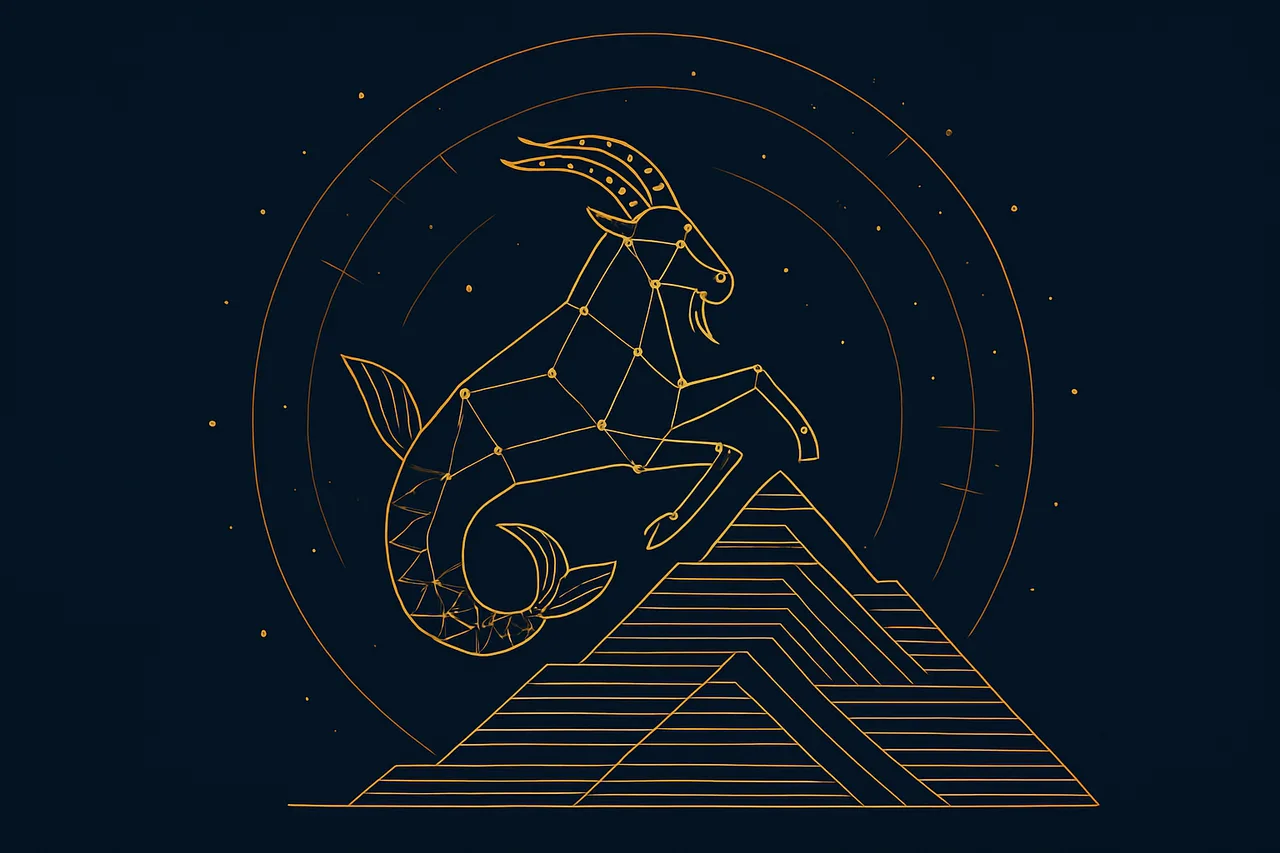
Makar (Makara) (Capricorn) · 270°–300° sidereal longitude · rashi lord Shani (Saturn) · Prithvi (Earth)
The standard line on Capricorn is "ambitious, disciplined, hard-working", and it is useless. Those are adjectives about behaviour, not statements about a chart, and they are the reason most Capricorn readings feel like a compliment you did not ask for. What actually shapes a Makar Moon is checkable structure, and the first piece of it is that Makara is the only movable earth sign in the zodiac. Chara (movable) signs initiate, relocate and push for change; prithvi (earth) measures results in things you can weigh. Saturn — the graha of delay — is put in charge of that combination. A mind that wants to move, in a mode that only counts what is finished, under a planet whose instrument is time. The friction between those three is the actual engine of what people label ambition.
The second piece is the sign's internal economy, and it is unusually blunt. Mars reaches his exaltation at 28° Makara and Jupiter reaches his debilitation at 5° Makara — the planet of exertion at his ceiling, the planet of expansion and grace at his floor, inside the same thirty degrees. Read that as an operating instruction rather than a personality trait: in this sign, effort is rewarded and expectation is not. That is why a Makar Moon so often distrusts good news, discounts praise, and finds it easier to work through a problem than to be carried through one. The distrust is not pessimism. It is the sign correctly reporting its own physics.
And the third piece is placement in the Kalapurusha, the zodiac read as one body: Makara is the natural tenth sign — karma, profession, standing, the visible record of what you did. A Makar Moon therefore carries a tenth-house signature in the first house of the self, which means identity and function are fused at the root. Ask a Makar native who they are and you will usually be told what they do. That fusion is the sign's greatest structural advantage and its single reliable vulnerability, and every section below is downstream of it.
The three nakshatras inside Makar — and which padas actually count
Makara runs 270°–300°, which is exactly nine padas of 3°20′ each: the last three of Uttara Ashadha, all four of Shravana, and the first two of Dhanishta. Because Makara is a movable (chara) sign, the classical rule starts its nine navamsas from the sign itself — so pada 1 of Makara falls in a Makara navamsa and is vargottama, doubling rather than modifying the rashi. (Kumbh, being a fixed sign, starts its navamsa count from the ninth; the two Saturn signs do not share this rule.) The three nakshatra lords here are the Sun, the Moon and Mars — no shadow planet holds any part of Makara.
Uttara Ashadha
266°40′–280°00′ (pada 1 in Dhanu; padas 2–4 in Makara) · Pada 2 = 270°00′–273°20′ · Pada 3 = 273°20′–276°40′ · Pada 4 = 276°40′–280°00′ · Lord: Surya (Sun) · Navamsa: Pada 2 → Makara (Saturn, vargottama) · Pada 3 → Kumbha (Saturn) · Pada 4 → Meena (Jupiter) · Nakul (mongoose) yoni · Manushya gana · Antya nadi · deity Vishvadevas · symbol elephant tusk
Makara opens on the "undefeated" nakshatra, and it opens vargottama — pada 2 sits in a Makara navamsa, so the sign's own character is concentrated rather than blended. This is the most patiently victorious ground in Makar: long campaigns, positions held until the other side tires, credit arriving years after the work. Born here, your Makar Moon is unusually resistant to being hurried and unusually bad at abandoning a losing project that could still be won. One caution that belongs to this stretch specifically: Jupiter's deepest fall, at 5° Makara, lands inside pada 3. That is the exact ground where the sign's scepticism about faith, generosity and easy answers is at its most literal.
Shravana
280°00′–293°20′ (all four padas in Makara) · Pada 1 = 280°00′–283°20′ · Pada 2 = 283°20′–286°40′ · Pada 3 = 286°40′–290°00′ · Pada 4 = 290°00′–293°20′ · Lord: Chandra (Moon) · Navamsa: Pada 1 → Mesha (Mars) · Pada 2 → Vrishabha (Venus) · Pada 3 → Mithuna (Mercury) · Pada 4 → Karka (Moon) · Vanar (monkey) yoni · Deva gana · Antya nadi · deity Vishnu · symbol the ear
The only nakshatra lying wholly inside Makara, and the one that softens the sign most. Shravana is the ear — hearing, oral transmission, knowledge received rather than seized — and its lord is the Moon, so a Makar Moon born here has the lunar significator doubled onto a Saturn sign. Practically, these are the Makar natives who take counsel, remember what people said, and build authority by listening rather than by asserting. Pada 4, in a Karka navamsa ruled by the Moon again, is the most domestic and the most emotionally porous stretch in the entire sign; pada 1, in a Mars navamsa, is the most combative. That is a wide range to sit inside one nakshatra, which is exactly why "Shravana" alone is not enough information.
Dhanishta
293°20′–306°40′ (padas 1–2 in Makara; padas 3–4 cross into Kumbh) · Pada 1 = 293°20′–296°40′ · Pada 2 = 296°40′–300°00′ · Lord: Mangal (Mars) · Navamsa: Pada 1 → Simha (Sun) · Pada 2 → Kanya (Mercury) · Simha (lion) yoni · Rakshasa gana · Madhya nadi · deity the Vasus · symbol the drum
The last six degrees and forty minutes of Makara, and by some distance the loudest. Mars as star lord over a Saturn sign puts heat under the sign's patience, and the Vasus — the eight deities of material abundance — are why Dhanishta carries the classical wealth reputation. This is the stretch that performs, keeps time, and competes openly, which is atypical for Makar. The detail that matters: Mars's exact exaltation degree, 28° Makara, falls inside Dhanishta pada 2 — the ninth and final pada of the sign. Makara therefore begins in a nakshatra that holds Jupiter's deepest fall and ends in one that holds Mars's highest point. That arc, floor to ceiling across thirty degrees, is the shape of the sign.
Nine padas × 3°20′ = 30°, which is the arithmetic check that this table is complete. If your Moon sits within roughly half a degree of 270°, 280°, 293°20′ or 300°, treat your nakshatra as unconfirmed until you have an accurate birth time — the Moon covers about 0.55° an hour, so a two-hour error moves your pada, and the pada moves your navamsa lord. That is a larger change than anything today's transit will do.
Saturn over a Makar Moon — his own house, but not his best seat
Saturn rules Makara, and the temptation is to stop there and treat the two Saturn signs as one thing. They are not, and the cleanest way to see it is dignity. Saturn's mulatrikona — the arc where he functions closest to full capacity short of exaltation — lies in the first twenty degrees of Aquarius, not here. Across Makara, Saturn is swakshetra: at home, competent, unembarrassed, but not at his peak. That single fact sets the tone of the whole sign. Aquarius gets Saturn the legislator, designing the rule that others will live inside. Capricorn gets Saturn the labourer, doing the work the rule requires. The Makar Moon is not the person who wrote the policy; it is the person who has been implementing it for eleven years and could tell you every place it fails.
Then the tattva. Makara is prithvi — earth — and earth is the element of measurable outcome, so Saturn's discipline here does not stay abstract. It lands on matter and on the body, and it lands on the clock. The characteristic lived experience of a Makar Moon is that things take literal years, and that the years are felt rather than merely counted. Ask a Makar native how long something took and you will get an exact figure, usually longer than the person asking expected. This is the sign where "it took me nine years" is offered as an explanation rather than an apology.
The movable (chara) mode is the part almost nobody reads, and it is where Makar's reputation goes wrong. Saturn is the slowest graha; chara is the most restless mode. Putting them together produces a native who is genuinely driven to move — to change position, start the thing, relocate, be somewhere else — while carrying a dispositor whose only instrument is delay. That contradiction is the true source of what gets labelled Capricorn ambition, and reading it as simple discipline misses the cost. A Makar Moon is not calmly patient. A Makar Moon is impatient and slow at the same time, and has usually decided that showing the impatience would be undignified. Aquarius, being fixed, does not carry this particular tension at all: it can hold a position indefinitely without wanting to move.
This is also where the sign's internal economy stops being trivia. Mars exalted at 28° and Jupiter fallen at 5° means force works here and faith does not — so the Makar answer to almost any problem defaults to more effort. It is a reliable strategy and it has a predictable failure mode: it does not know when to stop applying it. The Makar-specific question is not "can you work harder?" — you can, and you will — it is "is more effort actually the missing ingredient here?" For a meaningful share of the problems a Makar Moon brings to a reading, the honest answer is no, and the exalted Mars is precisely what makes that answer hard to hear.
Finally, the clock. Saturn takes about twenty-nine and a half years to circle the zodiac and roughly two and a half years per sign, so each of the twelve houses counted from your Moon gets about thirty months of Saturn, once a generation. He also retrogrades once a year for roughly four and a half months — in 2026, from late July to mid-December. For a Makar Moon, tracking which house Saturn currently occupies from the Moon is the single most useful piece of timing available without a birth chart, because Saturn is both the transiting pressure and the dispositor of your mind. It tells you what is being audited. The next section says exactly where he is.
Where the slow planets sit right now, counted from Makar
Everything here is counted FROM Makara, which is the only way a transit reading means anything for a Moon sign. Positions were computed on 7 August 2026 on the Lahiri ayanamsa. Ingress moments are given as months rather than exact dates on purpose: the fast module behind these statements is sign-accurate rather than arc-second, and day-precise crossings belong to the full chart engine that the live panel on this page quotes.
Start with the question everyone arrives with. Makar is NOT in Sade Sati, and this is worth stating plainly because "Capricorn is a Saturn sign, so Saturn must be sitting on it" is the obvious wrong inference. Sade Sati runs while Saturn transits the 12th, 1st and 2nd from the Moon — for Makara that means Dhanu, Makara and Kumbha. Saturn entered Dhanu at the end of January 2017, reached Makara itself in January 2020 for the peak phase, moved into Kumbha in January 2023 for the setting phase, and left Kumbha for Meena on 1 April 2025. Your Sade Sati finished in early April 2025, a little over sixteen months ago. The next one does not begin until Saturn re-enters Dhanu in December 2046. Anyone selling a Makar native Sade Sati remedies in 2026 is selling remedies for a cycle that ended before last year's monsoon.
What Saturn is actually doing is considerably better than that. Saturn stands at 20°06′ Meena, which is the 3rd from Makara — and in the classical gochar tables the 3rd, 6th and 11th from the Moon are the three houses where Saturn transits favourably. The 3rd is the upachaya house of effort, courage, siblings, short journeys and self-assertion, and Saturn there rewards exactly the thing this sign is built to do: sustained, unglamorous, incremental push. This is the good stretch. It began when Saturn left Kumbha in April 2025 and it runs until Saturn reaches Mesha — the 4th from Makara — around June 2027, with a retrograde return to Meena that autumn before he clears for good in early 2028. When Saturn does reach the 4th, that is the beginning of the transit many traditions call Kantaka Shani or Shani Dhaiya, pressing on home, mother, property and peace of mind. So the honest calendar for a Makar Moon is: favourable Saturn now, roughly ten more months of it, then a different and heavier chapter from mid-2027.
One refinement, because it is computable and almost nobody checks it. The classical vedha (obstruction) rule pairs Saturn's 3rd-house transit with the 12th: a planet sitting in the 12th from your Moon cancels the benefit. The 12th from Makara is Dhanu, and on 7 August 2026 Dhanu holds none of the slow planets — Saturn's favourable placement stands unobstructed. Vedha rules vary between texts and the fast-moving Moon passes through Dhanu for about two days a month, so treat this as a structural note about the year rather than a daily one. Saturn is also retrograde from late July to mid-December 2026, entirely within Meena. Retrograde in the 3rd is not a reversal of fortune; it is the same audit run backwards over effort you have already made, which for a Makar Moon usually surfaces as re-examining whether a push begun in 2025 was aimed at the right target.
Jupiter is the headline and it is time-limited. Jupiter is exalted in Karka — having passed its exact exaltation degree of 5° Karka, now at 13°49′ — and Karka is the 7th from Makara, the sign directly opposite yours. In the standard gochar tables Jupiter transits favourably through the 2nd, 5th, 7th, 9th and 11th from the Moon, so this is exalted Jupiter in a favourable house, aimed squarely at partnership, marriage, business alliance and open dealings with the other side. For a sign whose whole apparatus is built for solitary effort, a strong benefic sitting in the house of the other person is the most useful transit on this list and the one Makar natives are most likely to underuse. It has a deadline: Jupiter moves to Simha, the 8th from Makara, in November 2026 — an unfavourable gochar house — returns briefly to Karka in January 2027, and leaves for good in June 2027. Partnership decisions that have been waiting for a good year have one, and it is closing.
The nodes are the change to plan for. Rahu is at 6°22′ Kumbha, the 2nd from Makara, and moves into Makara itself in early December 2026, staying until mid-2028. Ketu, always opposite, shifts from Simha (the 8th) into Karka (the 7th) on the same axis change. So from December 2026 a Makar Moon inherits Rahu sitting directly on the Moon sign — appetite running ahead of judgement, unfamiliar directions turning magnetic, decisions accelerating — while Ketu empties the partnership house that exalted Jupiter is vacating at almost the same moment. That is a genuine hinge, and it is worth naming precisely because it is the same configuration Kumbh natives have been living since May 2025 and are about to hand over. Makar's open window and Makar's harder chapter are separated by roughly one calendar quarter, and the quarter is this one.
Timing, Makar Sankranti, and remedial practice for Makar
Saturday is the weekday, because Saturn rules the sign — but Makar shares that with Kumbh, so it is the least distinguishing thing that can be said about the sign's timing. What belongs to Makara and to no other rashi is the solar ingress. Makar Sankranti is the moment the Sun enters sidereal Capricorn, and on our computation it falls on 14 January in each year from 2025 through 2029, with the Sun leaving for Kumbha around 12–13 February. It is the one sankranti the whole subcontinent observes under a dozen names — Pongal, Uttarayan, Maghi, Magh Bihu, Khichdi — and the traditional offerings of til (sesame) and gud (jaggery) are a genuine convergence rather than a coincidence: sesame is classically Saturn's substance, and this is Saturn's sign receiving the Sun. For a Makar native, that fortnight from mid-January is the most natural annual reset point in the calendar, and it is a better anchor for beginning things than any generic Saturday.
Makar Sankranti also marks the traditional start of Uttarayana, the Sun's northern course, which classical muhurta treats as the auspicious half of the year for samskaras and beginnings — the half Bhishma waits for in the Mahabharata. Here we owe you an honesty note that almost no Capricorn page will give you, because it is the same precession the sign-dates section below explains. The actual astronomical solstice now falls around 21–22 December, while the sidereal Makara ingress falls on 14 January; the two coincided roughly seventeen centuries ago and have drifted about twenty-four days apart since. Both dates are observed, by different reckonings, and both are defensible. We are not going to pretend the gap does not exist in order to make the festival tidier.
For a deity anchor, Makar gives you something Kumbh cannot. Shravana is the only nakshatra lying entirely within this sign, its presiding deity is Vishnu, and its symbol is the ear. The practice implied by that is listening rather than reciting: Vishnu Sahasranama heard, Bhagavata katha attended, teaching received in oral form rather than read. Uttara Ashadha adds the Vishvadevas, the collective "all-gods" of long endurance and undefeated causes, and Dhanishta adds the eight Vasus, the deities of material abundance. Shani Dev remains the graha devata of the sign lord, and the widespread North Indian Saturday practice of the Hanuman Chalisa for relief from Saturn sits alongside it — named here as devotional tradition, which is what it is, not as a mechanism. But if you want the observance that is specifically Makar's, it is Shravana's: the ear, and what you allow into it.
Now gemstones, where Makar gets the most confidently wrong advice in the whole cluster. The reasoning usually runs: Mars is exalted in Capricorn, so red coral must be excellent for Makar natives. That inference fails at the first step, and it fails instructively. Dignity — exalted, own sign, debilitated — describes how well a planet functions. Functional nature — benefic or malefic — describes whose side it is on in YOUR chart, and it is reckoned from the ascendant, not the Moon. For a Capricorn ascendant, Mars rules the 4th and the 11th and is graded a functional malefic in the standard Parashari classification AskSoma uses, notwithstanding that its exaltation degree sits inside the lagna sign itself. Makara is the cleanest place in the zodiac to see that dignity and functional benevolence are two different questions. For the same Capricorn ascendant, Venus is the yogakaraka, ruling the 5th and the 10th — worth flagging because Aquarius rising also has Venus as yogakaraka but through the 4th and the 9th, so the two Saturn lagnas reach the same planet by different routes and it does different work for each.
And the boundary that matters more than any of it: everything in the previous paragraph is reckoned from the ascendant, and this page does not know yours. If you only know your Moon sign, no honest astrologer can grade your gemstones at all, because the grading needs a birth time. We would rather say that than sell you a stone, and red coral prescribed off an exaltation fact is exactly the kind of confident error this section exists to prevent.
The ownership map from Makar — your lord holds the first house and the second
Who is permanently accountable for each house, as distinct from who happens to be visiting it this month.
Makara is the 1st and Kumbha is the 2nd, and Saturn owns both. That is the whole opening argument of this sign. Your rashi lord does not merely define the mind, it also runs the store of value — savings, speech, what the family keeps — and the two are adjacent and inseparable. Kumbh is the mirror case, with Saturn on the 1st and the 12th; between us we are the only two rashis whose lord sits on the sign next door as well. What it produces in practice is a Moon sign for which self-worth and net worth are not metaphorically linked but structurally so, governed by the one graha that pays late and in full. A Saturn transit does not choose between your identity and your balance; it has both.
The 8th belongs to the Sun. Simha is the 8th from Makara, and the Sun owns Simha and nothing else, so your house of inheritance, upheaval and other people’s resources answers to a single-sign luminary — Dhanu is the only other rashi with that arrangement, using the Moon. For Makara it means the 8th behaves like a matter of standing and authority rather than of mood: what is inherited comes with a position attached, and what is lost there is usually status before it is money. Mercury takes your 6th and 9th, so obstacle and fortune share an owner. Venus takes the 5th and 10th, Mars the 4th and 11th, Jupiter the 3rd and 12th.
Against the snapshot this page is written to, the reading the map adds is about your own lord. On 7 August 2026 Saturn was at 20°07′ Meena, retrograde, sitting in your 3rd — owner of the 1st and 2nd, going backwards through the house of effort and initiative. Venus, which owns your 5th and 10th, was in your 9th at its own debilitation. The Sun, owner of your 8th, was at 20°48′ in your 7th with exalted Jupiter and Mercury. Your 1st, 4th, 10th, 11th and 12th held nothing slow at all.
Makar, Capricorn, and why your Sun sign probably does not match
Makar (also written Makara) is Capricorn — but the symbols are not the same animal, and the difference is more than pedantry. The Western Capricornus is the sea-goat. The Sanskrit makara is a composite aquatic creature, usually rendered as a crocodile with elements of fish, elephant and serpent: the vahana of Ganga and of Varuna, the makara-torana arch that frames temple doorways, and the emblem on Kamadeva's banner. It is a threshold creature and a river creature, not a mountain climber. That matters for reading the sign, because the makara does not ascend anything — it holds the boundary between water and land, and it waits. Note too that the classical vashya of this rashi is Jalchar, water-dwelling, which is the older symbolism reasserting itself against the goat.
The dates are where the confusion starts, so here they are separately. Vedic astrology uses the sidereal zodiac with the Lahiri ayanamsa, and on our computation the Sun occupies sidereal Makara from 14 January to about 12–13 February. Western astrology uses the tropical zodiac, where Capricorn runs roughly 22 December to 19 January. The gap is about twenty-four days, and it is not an error in either system — it is the accumulated precession of the equinoxes, which the sidereal zodiac tracks against the fixed stars and the tropical one does not. The practical consequence is uncomfortable and worth stating: most people born in late December and early January who have called themselves Capricorn their whole lives compute as sidereal Dhanu (Sagittarius), while a great many people born from mid-January to mid-February, who have been told they are Aquarius, are sidereal Makara and have never once been called it.
Then the distinction that outranks all of the above, and that the dates have nothing to do with. "Makar Rashi" in Indian practice almost always means your MOON sign — the sign the Moon occupied at the moment of your birth — not your Sun sign. Everything on this page is written for the Moon, because that is what rashifal means by rashi, and it is what every transit statement above is counted from. The Moon changes sign roughly every two and a quarter days, which means no date range in any calendar can give you your Moon sign; it needs your actual birth date and, for the pada, your birth time. If you arrived here from a Western horoscope knowing only that you are "a Capricorn", the honest position is that you may or may not be Makar Rashi, and roughly one person in twelve is. Computing it takes a minute and is the only way to know whether this page is about you or about someone else.
Mars exalted, Jupiter fallen — the inner economy of Makar
Every Capricorn page mentions Saturn. Very few mention that the sign also holds one planet's highest point and another's lowest, six degrees apart at either end of it, and that this is where the sign's actual temperament comes from. Degrees below are from the exaltation table used across AskSoma and are checkable arithmetic, not interpretation.
- Mars exalted at 28° Makara
- Mars reaches his exaltation degree at 28° Capricorn — inside Dhanishta pada 2, the very last pada of the sign. Exaltation means the planet operates at maximum effectiveness, so in Makara the significator of effort, force, engineering and direct action works better than anywhere else in the zodiac. Lived version: applying more effort genuinely does solve more problems for a Makar Moon than it does for most people, which is precisely why the strategy is so hard to retire when it stops working. Mars last crossed that exact degree on 21 February 2026 during its 17 January – 24 February pass through Makara; the next Makara transit begins 28 December 2027.
- Jupiter debilitated at 5° Makara
- Jupiter's exaltation is 5° Cancer, so his debilitation is the opposite point: 5° Capricorn, inside Uttara Ashadha pada 3. Debilitation does not mean harm; it means the planet's natural mode — expansion, faith, benefit received rather than earned, the benefit of the doubt — has the least traction here. This is the structural reason a Makar Moon discounts good news and finds unearned help genuinely uncomfortable rather than merely modest. Jupiter next transits Makara from March 2032.
- What the pair means together
- Effort at its ceiling, grace at its floor, in one sign. Makara rewards what you do and gives very little credit for what you hope, which produces a native who is formidable at execution and structurally underequipped for receiving. The most useful corrective for a Makar Moon is not more discipline — that faculty is already exalted — but deliberately practising the debilitated one: accepting help, allowing something to be easy, and letting a good outcome stand without auditing it first.
- Saturn's dignity here, precisely
- Saturn owns Makara but holds no exaltation and no mulatrikona in it — his mulatrikona arc is the first twenty degrees of Aquarius. Across Makara, Saturn is simply swakshetra, in his own sign. That is a real distinction and not a demotion: it means Makar's Saturn is Saturn doing his ordinary work at full competence rather than Saturn at his peak, which is why this sign labours where Aquarius legislates.
- The two Saturn signs are not interchangeable
- Makara is movable and earthy; Kumbh is fixed and airy. Makara holds two of the seven classical dignity points; Kumbh holds none at all. Makara's nakshatra lords are the Sun, Moon and Mars; Kumbh's include Rahu. And their Sade Sati windows are years apart — Makar's closed in April 2025, Kumbh's is still running. Any reading that treats "ruled by Saturn" as the end of the analysis will get one of the two signs wrong.
Exaltation and debilitation degrees are Parashari-standard and are the same values the AskSoma chart engine uses. Pada placement of each degree was derived from the sign's nine-pada table, not assigned by hand.
Where today's sky lands for a Makar (Makara) Moon
- Work
- Makara as the natural 10th sign of the Kalapurusha; Saturn transiting Meena, the 3rd from the Moon
- Makara is the zodiac's natural tenth sign, so a Makar Moon runs career questions through the same circuitry it runs identity questions through — which is why a stalled job feels like a stalled self here, far more sharply than it does for a Moon sign whose tenth lord is somebody else's business. Through 2026 the working signal is Saturn in the 3rd from your Moon, one of only three houses where his transit is classically favourable. The 3rd is the house of self-driven effort and short, repeated pushes, and Saturn there rewards precisely the incremental grind this sign is built for: progress that compounds quietly rather than arriving as an announcement. Use it — it runs until roughly June 2027, after which Saturn moves to the 4th and the pressure relocates from your effort to your foundations.
- Money
- 2nd from Makara = Kumbha (Saturn), with Rahu transiting it until December 2026
- Your second house — accumulated resources, savings, what you have rather than what you earn — is Kumbha, which puts the same Saturn in charge of your money as of your mind. That doubling is why a Makar Moon rarely has a chaotic financial life and often has an over-controlled one: the standing risk is not overspending but hoarding capacity, holding cash and effort in reserve for a contingency that has already been survived. Rahu has been transiting that second house and moves out into Makara itself in early December 2026. Rahu in the 2nd inflates appetite around holdings and income and makes unconventional or foreign-sourced money unusually attractive; when it shifts onto your Moon sign in December, the amplification moves from your assets to your identity. The practical read is that the last months of 2026 are a reasonable window to conclude financial arrangements begun under Rahu, and a poor window to begin new ones on the assumption that the appetite driving them is yours.
- Relationships
- 7th from Makara = Karka (Moon), currently holding exalted Jupiter; Ketu arrives December 2026
- The 7th from Makara is Karka, ruled by the Moon — which sets this sign opposite its own polarity: the most structured sign in the zodiac looking across at the most feeling one. Partners who ask for emotional availability rather than reliability are exactly the ones a Makar Moon is drawn to and exactly the ones it struggles to satisfy, because it keeps offering provision where responsiveness was requested. Right now that house holds exalted Jupiter, in a favourable gochar position, and this is the single most encouraging fact on the page: through to November 2026, with a short return in early 2027, partnership matters are carrying the strongest benefic support they will have for years. Ketu enters the same house in December 2026 and stays into 2028, which classically drains appetite from partnership rather than creating conflict. The window and its closing date are both known. Makar natives who wait for a more convenient time will be waiting on the other side of it.
- Health
- Makara governs the knees and joints in the Kalapurusha; earth-sign Saturn as the vata-in-matter signature
- In the Kalapurusha scheme Capricorn governs the knees, and by extension the skeletal frame, the joints and the connective structure that holds weight. That is the standing vulnerability for a Makar Moon, and it is a different one from the other Saturn sign, which takes the calves and ankles — Makar's complaints tend to be structural and load-bearing rather than circulatory. Saturn is the vata graha, but in an earth sign the vata expresses as dryness and depletion in tissue rather than as nervous agitation: stiffness, degeneration that arrives on a long clock, and the specific pattern of a body that was overworked for years and only reported it afterwards. The traditional direction is unglamorous and correct — warmth, oil, weight-bearing movement kept regular rather than heroic, and enough sleep. The behavioural risk is more specific than the physical one: this sign's exalted Mars and fused work-identity make "push through it" the default response to a symptom, and pushing through is exactly how a joint problem becomes a joint condition. None of this is a diagnosis, and a Makar Moon with a real symptom needs a doctor rather than a rashifal.
Makar (Makara) rashifal — frequently asked
Is Makar Rashi in Sade Sati in 2026?
No. Sade Sati runs while Saturn transits the 12th, 1st and 2nd from your Moon sign — for Makara that means Dhanu, Makara and Kumbha. Saturn entered Dhanu at the end of January 2017, reached Makara itself in January 2020 for the peak phase, moved into Kumbha in January 2023 for the setting phase, and left Kumbha on 1 April 2025. Your Sade Sati therefore ended in early April 2025, and the next one does not begin until Saturn re-enters Dhanu in December 2046. Being a Saturn-ruled sign does not mean being permanently in Sade Sati, which is the assumption most of the internet makes about Capricorn. As of August 2026 Saturn is in Meena, the 3rd from Makara, which is one of the three houses where his transit is classically favourable.
What is the difference between Makar Rashi and Capricorn sun sign?
Two differences, stacked. First, Makar Rashi almost always means your MOON sign in Indian practice, while a Western "Capricorn" is your Sun sign — different planet, different question. Second, Vedic astrology uses the sidereal zodiac with the Lahiri ayanamsa, where the Sun is in Makara from 14 January to about 12–13 February; Western astrology uses the tropical zodiac, where Capricorn runs roughly 22 December to 19 January. The roughly 24-day gap is the precession of the equinoxes, not an error in either system. In practice this means most lifelong Western Capricorns compute as sidereal Dhanu, and many people who were told they are Aquarius are sidereal Makara. The Moon changes sign every two and a quarter days, so no date range can give you your Moon sign — it has to be computed.
When is Makar Sankranti and does it matter for Makar Rashi natives?
Makar Sankranti is the moment the Sun enters sidereal Capricorn, and on our computation it falls on 14 January in each year from 2025 through 2029, with the Sun leaving Makara for Kumbha around 12–13 February. It is your sign's solar ingress, observed across India as Pongal, Uttarayan, Maghi, Magh Bihu and Khichdi, and the traditional til (sesame) and gud (jaggery) offerings line up neatly with the fact that sesame is classically Saturn's substance and this is Saturn's sign receiving the Sun. It marks the traditional start of Uttarayana, the auspicious northern half of the year in classical muhurta. One honest caveat: the astronomical solstice now falls around 21–22 December, about twenty-four days before the sidereal ingress, because of the same precession that separates the Vedic and Western date ranges. Both dates are observed by different reckonings.
Which nakshatras fall in Makar Rashi?
Three, though only one lies wholly inside the sign. Uttara Ashadha contributes its 2nd, 3rd and 4th padas (270°00′–280°00′, lord the Sun). Shravana contributes all four padas (280°00′–293°20′, lord the Moon) — the only complete nakshatra in Makara, with Vishnu as its deity and the ear as its symbol. Dhanishta contributes its first two padas (293°20′–300°00′, lord Mars), with its remaining two crossing into Kumbh. That is nine padas of 3°20′ each, totalling the sign's thirty degrees. Because Makara is a movable sign, its navamsa count starts from Makara itself, which makes its first pada vargottama.
Is red coral good for Makar Rashi because Mars is exalted in Capricorn?
That is the most common confident error made about this sign, and the reasoning fails at the first step. Mars is genuinely exalted in Capricorn — its exact exaltation degree is 28° Makara, inside Dhanishta pada 2. But dignity describes how well a planet functions, while functional nature describes whose side it is on in your chart, and functional nature is reckoned from the ASCENDANT, not the Moon sign. For a Capricorn ascendant, Mars rules the 4th and the 11th and is graded a functional malefic in the standard Parashari classification — in the very sign where it exalts. Venus is the yogakaraka for that lagna instead, ruling the 5th and the 10th. And if you only know your Moon sign, the grading cannot be done at all, because it needs a birth time. Get the ascendant confirmed first; the gemstone question is downstream of it, and strengthening a functional malefic is the most common self-inflicted remedy error in Jyotish.
What this page can NOT tell you
- A Moon sign describes roughly one-twelfth of everyone alive. Every transit statement above is correctly counted from Makara and is genuinely true for all of them — which is exactly why none of it is specific to you. What Saturn in the 3rd or exalted Jupiter in the 7th will actually produce depends on which houses Meena and Karka occupy in YOUR chart, which planets you have there natally, and which Vimshottari period you are running. Two Makar Moons in different Mahadashas will experience this identical sky as different years.
- This page cannot tell you which of the nine padas your Moon occupies, and for Makara that gap is unusually costly, because the sign runs from a pada containing Jupiter's deepest fall to a pada containing Mars's exact exaltation. Uttara Ashadha pada 3 and Dhanishta pada 2 sit at opposite ends of the same thirty degrees with different lords, different navamsas and different temperaments. Finding your pada needs a computed chart, not a date range.
- The Sade Sati answer on this page is dated, not permanent. Makar's cycle ran from January 2017 to April 2025 and the next begins in December 2046 — but those are Saturn's ingress dates, and once the computed-on stamp above is well behind you, verify rather than assume. The same applies in the other direction: this page says Makar is clear of Sade Sati, and that is a statement about 2026, not a blanket reassurance.
- Functional grading — Venus as yogakaraka for Capricorn rising, Mars as a functional malefic there despite its exaltation — is reckoned from the ASCENDANT, not the Moon. It applies to you only if Makara is also your rising sign, which needs an accurate birth time to establish. We flag that boundary rather than let you act on a gemstone recommendation that was never addressed to you.
- Timing lives in the Dasha, not on a sign page. Gochar describes the weather; the Mahadasha and Antardasha describe whose season it is. When a Makar native asks "when will the work finally pay off?", the honest answer needs a birth time, and this page does not have one. What it can tell you is which houses are currently supported and when that changes.
- Nothing here is medical, legal or financial advice, and no honest Jyotish reading names an outcome as certain. This disclaimer carries more weight for Makar than it usually does: a Moon in the natural tenth sign reads a career line as a verdict on itself, and a sign with exalted Mars treats any described pressure as an instruction to work harder. Neither is meant that way. What you do inside a window is not in the chart.
Sign placements, nakshatra padas and transit positions on this page are computed sidereally with the Lahiri (Chitra-paksha) ayanamsa. Full birth charts on AskSoma use Swiss Ephemeris; the transit and ingress statements above were computed on 7 August 2026 with the lightweight engine that also drives the live panel, which is sign-accurate but not arc-second precise — which is why ingress and station moments are stated at month resolution rather than as exact dates, and why the Sade Sati boundary dates carry roughly a day of uncertainty. The Sade Sati window was computed by scanning Saturn's ingresses daily from 2014 to 2052 rather than assumed from the sign's ruler. Classical claims — Mars's exaltation at 28° Capricorn, Jupiter's debilitation at 5° Capricorn, Saturn's mulatrikona lying in Aquarius rather than here, the navamsa counting rule for movable signs, and the nakshatra lords and deities — follow Brihat Parashara Hora Shastra and the standard gochar tables. Where traditions disagree, such as which houses from the Moon count as Kantaka Shani or how vedha applies, we say so on the page rather than picking one silently.
How AskSoma computes and what we refuse to claim · Engine: Swiss Ephemeris for full birth charts; a lightweight truncated-series engine for the live sky panel and the transit statements on this page. · Ayanamsa: Lahiri (Chitra-paksha) — the Rashtriya Panchang standard. · Content reviewed 2026-08-07 · Transit positions computed for 2026-08-07
What people rate AskSoma
4.8/5 from 100+ reviews on the selected public wall; 4.5/5 on Trustpilot from 16 reviews; 9.6/10 average across 286 selected satisfaction responses. Figures as of 2026-06-25. Satisfaction is not Net Promoter Score.
About the author
Written by Savan Vyas, founder of AskSoma.
The astrology is not written from memory: every chart position, dasha period and panchang timing AskSoma shows is computed with the Swiss Ephemeris on the Lahiri (Chitrapaksha) ayanamsa. How we calculate.