Simha Rashifal — Daily Vedic Reading for the Leo Moon Sign
The direct answer: Simha Rashifal — Daily Vedic Reading for the Leo Moon Sign: Your Simha rashifal reads the sky against a Moon that sat between 120° and 150° sidereal at birth — Leo in English, and the Sun’s single house in Jyotish. Simha is one of only three signs whose first degree lands exactly on a nakshatra boundary, which is why it holds two whole nakshatras rather than fragments. AskSoma publishes this at asksoma.ai/rashifal/simha as a free Vedic astrology resource using Swiss Ephemeris calculations and classical Jyotish interpretation — not generic sun-sign copy.
Your Simha rashifal reads the sky against a Moon that sat between 120° and 150° sidereal at birth — Leo in English, and the Sun’s single house in Jyotish. Simha is one of only three signs whose first degree lands exactly on a nakshatra boundary, which is why it holds two whole nakshatras rather than fragments.
Start with your own chart
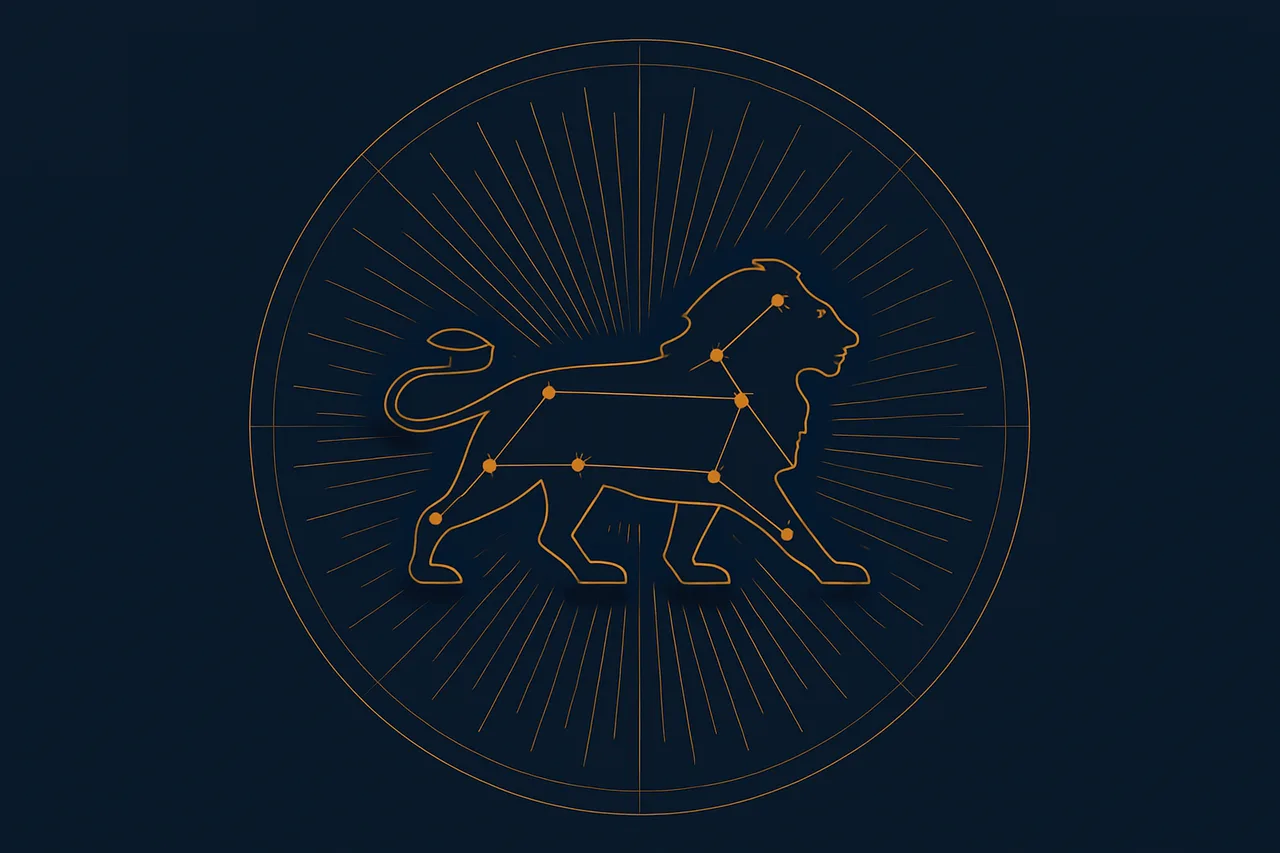
Simha (Leo) · 120°–150° sidereal longitude · rashi lord Surya (the Sun) · Agni (Fire)
Almost everything written about Leo is written about the Sun sign, and almost all of it is adjectives. This page is about the Moon sign, which is what rashi means in Indian practice, and it starts from a structural fact rather than a compliment: the Sun rules exactly one sign in the zodiac, and this is it. Mercury, Venus, Mars, Jupiter and Saturn each own two houses. Surya owns Simha and nothing else. So a Simha Moon has a dispositor with no second address — whatever condition the Sun is in, that is the whole reading, with no alternate seat to fall back on.
The second fact is the one that shapes the temperament, and it is not about pride. The Sun is the karaka of atman — self, will, the part that does not change. The Moon is the karaka of manas — the responsive, tidal, changeable mind. A Simha Moon places the most changeable significator in the house of the least changeable graha, and the Sun is the one graha that never turns retrograde. It has no reverse gear. That is why a Simha Moon so often cannot revise a position it has already taken, and why reading that as stubbornness misses what is actually happening: the mind wants to move and its ruler has no mechanism for going back over ground.
And one honest correction to the royal framing, because it is checkable. The Sun holds moolatrikona in Simha, from 0° to 20°, which is genuine strength. But the Sun is exalted in Mesha, not here. Its own house gives it a seat, not a throne — the sign is where Surya is at home, not where Surya is at his best. Simha also holds no exaltation degree at all, and no debilitation degree either. Nothing arrives in this sign pre-amplified or pre-broken. Planets here have to be read on their merits, which is exactly the opposite of the shortcut most Leo writing takes.
The nakshatras of Simha — two whole stars and one pada
Simha spans 120°–150°, and that opening degree is the interesting part: 120° divided by 13°20′ is exactly 9, so Simha begins precisely where a nakshatra begins. Only three signs do that — Mesha at 0°, Simha at 120°, Dhanu at 240° — because the sign and nakshatra grids only realign every fourth sign, which happens to be the fire trine. The consequence is that Simha holds two COMPLETE nakshatras, Magha and Purva Phalguni, plus the first pada of Uttara Phalguni, rather than the ragged fragments most signs get. The navamsa column follows the classical rule for a fixed (sthira) sign: the nine navamsas begin from the 9th sign, which for Simha is Mesha — so they run Mesha through Dhanu in order. Every degree below is arithmetic you can check by hand.
Magha
120°00′ – 133°20′ (all four padas in Simha) · Pada 1 = 120°00′–123°20′ · Pada 2 = 123°20′–126°40′ · Pada 3 = 126°40′–130°00′ · Pada 4 = 130°00′–133°20′ · Lord: Ketu · Navamsa: Pada 1 → Mesha (Mars) · Pada 2 → Vrishabha (Venus) · Pada 3 → Mithuna (Mercury) · Pada 4 → Karka (Moon) · Mushak (rat) yoni · Rakshasa gana · Antya nadi
The throne at the front of the sign, and the only nakshatra in the zodiac whose deity is the Pitris — the ancestors. Being born here puts a lineage claim underneath the solar temperament: authority feels inherited rather than earned, which is a gift when the inheritance is real and a weight when it is only assumed. Ketu as star lord over a Simha Moon is the sign’s deepest internal contradiction, because the graha of relinquishment governs the opening of the sign of holding position. Pada 1 in a Mars navamsa is the most combative slice; pada 4 in a Karka navamsa is where the ancestral theme becomes domestic and protective rather than positional. Ketu is currently transiting this nakshatra, which is its own — see the transit section.
Purva Phalguni
133°20′ – 146°40′ (all four padas in Simha) · Pada 1 = 133°20′–136°40′ · Pada 2 = 136°40′–140°00′ · Pada 3 = 140°00′–143°20′ · Pada 4 = 143°20′–146°40′ · Lord: Shukra (Venus) · Navamsa: Pada 1 → Simha (Sun, vargottama) · Pada 2 → Kanya (Mercury) · Pada 3 → Tula (Venus) · Pada 4 → Vrishchika (Mars) · Mushak (rat) yoni · Manushya gana · Madhya nadi
The front legs of the bed, deity Bhaga, aim kama — rest, pleasure, union and the enjoyment of what has been won. Venus as star lord in the Sun’s own sign is the sign’s pressure valve: this is the stretch of Simha that can actually stop working and be delighted by something, which the Magha degrees find much harder. Pada 1 is vargottama — the navamsa repeats Simha itself, so the sign’s character is concentrated rather than modified, and it is the single purest expression of Simha in the zodiac. Pada 4, in a Mars navamsa under Venus, is where charm and heat sit in the same three degrees and the native is most likely to be misread as either.
Uttara Phalguni
146°40′ – 160°00′ (pada 1 in Simha, padas 2–4 in Kanya) · Pada 1 = 146°40′–150°00′ · Lord: Surya (the Sun) · Navamsa: Pada 1 → Dhanu (Jupiter) · Gau (cow) yoni · Manushya gana · Adi nadi
The last three degrees and twenty minutes of Simha, and the only stretch of the sign where the rashi lord is also the star lord — the Sun ruling both. That doubling makes this the most straightforwardly solar ground in Simha and, counter-intuitively, the least self-referential: Uttara Phalguni’s deity is Aryaman, its aim is moksha, and its signature is patronage, formal agreement and credit given properly to other people. A Dhanu navamsa under Jupiter adds a moral frame the rest of the sign does not have. If your Moon is here, you are the part of Simha that builds institutions rather than reputations.
Nine padas of 3°20′ = 30°, which is the arithmetic check that this table is complete. If your Moon is within about half a degree of 120°, 133°20′, 146°40′ or 150°, treat your pada as unconfirmed until you have an accurate birth time — the Moon covers roughly 13° a day, about 0.55° an hour, so a two-hour error moves a pada and a pada moves the navamsa lord. That is a larger change than anything today’s transit will do.
The Sun over a Simha Moon — atman ruling manas, and what it burns
Put the two luminaries in one sentence and the tension is obvious. Surya is a single, fixed, self-luminous body that moves at almost constant speed and never reverses; Chandra changes sign every two and a quarter days, waxes and wanes, and takes its light from something else. Jyotish treats them as different faculties, not different moods: the Sun is who you are when nothing is happening, the Moon is what happens to you internally when something is. A Simha Moon runs the second through the first. In practice that produces a person whose feelings arrive already interpreted as statements about identity. A slight is not experienced as a slight; it is experienced as a claim about your standing, which is a much larger thing to have to absorb and a much harder thing to let go of.
This is also why a Simha Moon rarely does small hurt well and often does large adversity remarkably well. Manas under a solar dispositor has no vocabulary for a minor injury — everything gets routed through the self. But the same routing means that when something genuinely enormous lands, the machinery is already the right size for it. Simha natives are frequently at their most impressive in the situations other people describe as unsurvivable, and at their most difficult in the ones other people describe as trivial. That is one mechanism producing both, and it is a structural feature of the sign rather than a character flaw.
Now the part almost no sign page mentions, because it reads as a paradox: the sign named for radiance is also the annual place where other grahas are extinguished. Combustion — astangata — happens where the Sun is, and the Sun is in Simha for roughly one month every year. In 2026 the Sun occupied sidereal Simha from 17 August to 17 September on our calculation. During that window, any planet crossing your own Moon sign is inside your rashi lord’s glare, and the orbs used across AskSoma are the classical ones: Mercury 14°, Venus 10°, Jupiter 11°, Saturn 15°, Mars 17°, the Moon 12°. Mercury and Venus never travel more than about 28° and 48° from the Sun respectively, so those two combust most often — Mercury was combust from 14 August to 14 September 2026, spanning almost exactly the Sun’s Simha month.
The practical read for a Simha Moon is this. Once a year, the house of your own mind is the one place where another graha cannot be seen clearly. Whatever significations that planet carries — Mercury’s judgement and paperwork, Venus’s comfort and agreements, Jupiter’s counsel — go quiet inside the sign that is supposed to be your strongest ground. Simha natives typically experience the Sun’s own month as a stretch where their conviction is high and their advisers seem to have nothing useful to say. Both halves of that are the same transit. The discipline is to notice that the missing input is missing because of position, not because it was worthless.
One last note on the Sun’s cycles, since it is the only graha whose cycle a Simha Moon is genuinely governed by. The Sun does not retrograde and does not station, so there is no Simha equivalent of a Mercury-retrograde or Saturn-retrograde window — nothing periodically reverses your dispositor. What the Sun does instead is change sign like clockwork, roughly every thirty days, and each ingress moves your rashi lord into a new house counted from your Moon. That is the rhythm a Simha Moon actually lives on: twelve month-long chapters a year, each one relocating the Sun rather than weakening it. On 7 August 2026 the Sun sat at 20°48′ Karka, the 12th from Simha — the quietest, most withdrawn placement of the twelve, and the one immediately before it comes home.
The 2026 sky, counted from Simha — Ketu on the Moon, Saturn in the 8th
Transits only mean something for a Moon sign when they are counted FROM that sign, so everything here is reckoned from Simha. Positions were computed on 7 August 2026 with the Lahiri ayanamsa. Ingress and station dates are given at month or approximate-day resolution on purpose: the fast module that produced them is sign-accurate rather than arc-second.
Start with Ketu, because for Simha in 2026 it is the headline and it is doing something unusually specific. Ketu is at 6°22′ Simha — sitting directly on the Moon sign, the 1st house from your rashi. It arrived on 19 May 2025 and leaves for Karka around 6 December 2026. But the detail that matters is where inside Simha it now is. The nodes always move backwards, so Ketu entered this sign at its last degree and has been reversing through it for eighteen months; on our scan it crossed into Magha around 29 March 2026, and Magha is Ketu’s own nakshatra. For the last eight months of its Simha transit, Ketu is travelling through the star it rules — and because Magha lies wholly inside Simha and nowhere else, this is a configuration that can only happen to this sign. Ketu at 6°22′ Simha sits in Magha pada 2.
What Ketu on the Moon does is subtract rather than attack. It does not create conflict; it removes appetite and removes the sense that the usual rewards are worth collecting. For most Moon signs that reads as detachment. For Simha specifically it lands on the one faculty the sign is built around — recognition — and Simha natives in this window have typically described a strange flatness about achievements that would have delighted them two years earlier. Magha’s deity is the Pitris, the ancestors, and its symbol is the royal throne; Ketu in its own Magha is the significator of renunciation transiting the star of inherited position. Read plainly: this is a period where what you were given, what you inherited, and what you are owed all stop feeling like enough. That is uncomfortable and it is not a malfunction.
Then Saturn, which is the slower and heavier of the two live pressures. Saturn is at 20°07′ Meena, which is the 8th from Simha — Ashtama Shani, and a genuinely different transit from Sade Sati, which this sign is nowhere near. Saturn entered Meena around April 2025, went retrograde on 28 July 2026 at 20°14′, turns direct around 12 December 2026 at 13°24′, reaches Mesha in mid-2027, retrogrades back into Meena that autumn, and clears the sign for good in early 2028. So Simha’s Ashtama Shani runs roughly three years and is a little past its midpoint. The 8th house governs what is hidden, inherited, jointly owned, and slow to resolve: other people’s money, obligations you did not sign for, chronic rather than acute difficulty, and the long delay before a thing concludes. Saturn there does not remove; it postpones and it audits. Simha natives report this stretch as one where nothing dramatic happens and nothing finishes either.
Rahu sits opposite Ketu at 6°22′ Kumbha, the 7th from Simha — and that placement is sharper for this sign than for any other, for a structural reason set out in the table below: Kumbha is Saturn’s sign, and Saturn is the Sun’s classical adversary. So a Simha Moon’s partnership house is already governed by its own lord’s antagonist, and Rahu has been amplifying it since May 2025. Rahu in the 7th inflates the other party: partners become larger, more foreign, more magnetic and less legible than they are. With Ketu emptying your own side of the axis at the same time, the 2025–26 signature for Simha is unusually clean to name — your appetite down, their apparent scale up. The axis shifts in early December 2026 and that specific distortion ends.
Jupiter is the relief and it is datable. Jupiter is exalted in Karka at 13°49′, the 12th from Simha, which is the weakest house to receive even the strongest benefic — exalted Jupiter spending its strength on expenses, foreign matters, retreat and things that happen out of sight. It enters Simha itself around 4 November 2026, a month before Ketu leaves. For roughly four weeks Jupiter and Ketu share your Moon sign; after that, Jupiter has the 1st house to itself. For a sign that has had the significator of renunciation parked on its rashi for a year and a half, Jupiter arriving in the same degree-space as it departs is the single most encouraging dated change on this page.
Timing, ancestors, and the ruby question
The weekday is Ravivar — Sunday — and Simha is one of only two signs that does not share its day with a sibling sign, because the Sun owns no second house. That is worth knowing precisely because it is the reason Sunday is a weaker instrument than people assume: a whole day is not a Simha window, it is a day whose first hora after sunrise belongs to Surya. The genuinely Simha-flavoured alignment is not a clock hour at all but sunrise itself, and the Sun’s own sidereal month — 17 August to 17 September in 2026 — when your rashi lord is in your rashi. Beginnings that need visibility, a public claim, or someone senior to say yes belong in that month rather than in a randomly chosen Sunday.
The distinctly Simha remedial anchor is not a Sun practice, though, and this is where the sign differs most from the generic advice. Magha is the only nakshatra in the zodiac whose presiding deity is the Pitris — the ancestors — and Magha occupies the first 13°20′ of Simha and no other sign. That gives Simha natives a lineage anchor no other rashi has by construction. Tarpana and the shraddha rites of Pitru Paksha are the classical practice attached to it, and for a Simha Moon in 2026, with Ketu — the graha of what is finished and handed on — transiting Magha itself, ancestral observance is the remedial line that actually matches the transit. We name this as devotional tradition, which is what it is, not as a mechanism.
On the solar side the classical text is the Aditya Hridayam, the hymn Agastya gives Rama in the Yuddha Kanda of the Valmiki Ramayana, recited at sunrise; Surya Namaskar and an arghya of water offered to the rising Sun are the ordinary household practice. All of that is available to anyone. What is specific to Simha is only that it addresses your dispositor rather than a transit.
And the ruby, because this is where Simha gets bad advice more reliably than any other sign. The standard Moon-sign gem table gives Simha a ruby (manikya) in gold, worn on a Sunday, and that table is genuinely what most sites are reading off. It is also not a safety assessment. Gemstone grading is decided by a planet’s FUNCTIONAL nature, which is reckoned from the ascendant, never from the Moon. If Simha is also your rising sign, the Parashari grading used across AskSoma makes the Sun a functional benefic and Mars the yogakaraka — Mars rules both the 4th and the 9th from Leo lagna, and is the strongest single planet in that chart. It also makes Venus a functional malefic for Leo rising, which is the opposite of what a diamond recommendation off your Moon sign would assume, and Mercury and Saturn malefic too. If you only know your Moon sign, none of that grading can be done for you, and we would rather say so than sell you a stone.
One more sign-specific timing item, since it is in the classical Ghatak table and almost never surfaced: for Simha the Ghatak (obstructive) set is Saturday, tithis 3, 8 and 13, the nakshatra Mula, the yoga Shoola, the karana Balava, the lunar month Phalguna, and the first prahar of the day. Ghatak is a traditional avoid-list for beginnings, not a prediction of harm, and different paramparas weight it differently — but if you are choosing between two otherwise equal muhurats, this is the sign-level tiebreaker that belongs to Simha and to no one else.
Simha, Leo, and why your birthday probably does not match
Simha is the Sanskrit for lion, and the sign carries the animal rather than a symbol of it — no scales, no vessel, no pair of fish. Vashya for Simha is Vanachar, the forest-dwelling class, which is a more useful summary of the sign than the English adjectives usually attached: not a ruler by appointment but an animal whose authority is a fact of the terrain rather than a grant from anyone.
The dates are where the confusion starts, so here they are separately and computed. Vedic astrology uses the sidereal zodiac with the Lahiri ayanamsa: on our computation the Sun occupied sidereal Simha from 17 August to 17 September in 2026, and those boundaries drift by about a day across a lifetime. Western astrology uses the tropical zodiac, where Leo runs roughly 23 July to 22 August. The gap is about twenty-four days, and it is not an error in either system; it is the accumulated precession of the equinoxes, which the sidereal zodiac tracks and the tropical one does not. That is why a great many lifelong Leos compute as Karka in a Vedic chart, and why people born in the first half of September find they are sidereal Simha having never been told so.
Then the larger distinction, which the dates have nothing to do with. Rashifal in Indian practice means the MOON sign, not the Sun sign — everything on this page, and every house counted above, is reckoned from where the Moon was at your birth. The Moon changes sign roughly every two and a quarter days, so no date range can give it to you; it needs your actual birth date and, for the pada, the time. Roughly one person in twelve has a Simha Moon, and it is not the same twelve as the ones who call themselves Leos. If you arrived here from a Western horoscope, the honest position is that you may or may not be Simha rashi, and only a computed chart settles it.
The twelve houses counted from Simha — and the two Saturn signs in the middle
A rashifal is only as good as its house arithmetic. Counting from Simha produces one configuration that belongs to this Moon sign alone, and it is not flattering: Saturn owns BOTH the 6th and the 7th. Makara is the 6th from Simha and Kumbha is the 7th, and they are the only two signs Saturn rules — so the only Moon sign for which Saturn governs conflict and partnership together is this one. Saturn is also the Sun’s classical adversary. That is the structural reason a Simha Moon experiences opposition and intimacy through the same lens, and it is checkable rather than a personality claim.
| House from Simha | Sign | Lord | What it means for a Simha Moon |
|---|---|---|---|
| 1st | Simha | Sun | The mind itself. Ketu is here through 6 December 2026, and Jupiter arrives around 4 November — a four-week overlap, then Jupiter alone. |
| 2nd | Kanya | Mercury | Savings, speech, family table. Kanya is the sign where Venus falls, so a Simha Moon’s store of value is held in the one sign that discounts comfort. Venus transits here at 6°06′ on 7 Aug 2026 — debilitated, in your money house. |
| 6th | Makara | Saturn | Debts, disputes, service, illness. Saturn’s earthy sign: obstacles that are slow, structural and administrative rather than sudden. |
| 7th | Kumbha | Saturn | Partnership, ruled by the Sun’s adversary in his airy sign. Rahu sits at 6°22′ here through early December 2026, opposite Ketu on your Moon. |
| 8th | Meena | Jupiter | Inheritance, joint resources, delay, what is hidden. Saturn is here at 20°07′ — Ashtama Shani, running roughly April 2025 to early 2028. |
| 10th | Vrishabha | Venus | Career and public standing under Venus, not the Sun. A solar identity with a Venusian 10th: the work that gets you seen is relational and aesthetic, not commanding. |
| 11th | Mithuna | Mercury | Gains, networks, income. Mercury rules this AND the 2nd, so both money houses answer to one graha — and Mercury is a functional malefic for Leo lagna. |
| 12th | Karka | Moon | Loss, retreat, foreign ground, sleep. On 7 Aug 2026 this house holds the Sun (20°48′), exalted Jupiter (13°49′) and Mercury (2°09′) at once — three grahas including your own rashi lord, all out of sight. |
Houses 3, 4, 5 and 9 (Tula, Vrishchika, Dhanu, Mesha) carry no slow-planet transit on the computed date and are omitted rather than padded. Positions computed 7 August 2026, Lahiri sidereal.
Where today's sky lands for a Simha Moon
- Work
- 10th from Simha = Vrishabha (Venus); Mars transiting Mithuna, the 11th, at 2°50′ on 7 Aug 2026
- The mismatch here is worth naming because it explains a recurring Simha frustration. Your Moon sign is solar — singular, visible, wanting to be the thing rather than to serve it — but the 10th from Simha is Vrishabha, and Vrishabha is Venus’s. The house of standing is therefore governed by the graha of relationship, taste and mutual benefit. Simha natives who try to build a career by being unmistakably good at something often find that recognition arrives through the Venusian route anyway: who liked working with them, whose room they were in, what felt pleasant to be near. That is not a compromise of the solar nature, it is the 10th lord doing its job. Meanwhile Mars is at 2°50′ Mithuna, the 11th from your Moon — a competitive transit over gains and networks, which favours pushing a group project across the line and disfavours a fight about credit.
- Money
- Both money houses Mercury-ruled — 2nd = Kanya, 11th = Mithuna — with debilitated Venus at 6°06′ Kanya on 7 Aug 2026
- Simha is one of the few Moon signs whose 2nd and 11th share a single lord: Mercury owns Kanya and Mithuna, so what you save and what you earn are answerable to the same graha. That concentrates the reading rather than diluting it — for a Simha Moon, money problems and money solutions are usually the same problem, which is accounting rather than income. And the 2nd being Kanya matters twice: it is Mercury’s sign and it is also where Venus is debilitated, which means the house holding your stored value is the one place in the zodiac least willing to pay for comfort. On 7 August 2026 Venus itself is transiting there at 6°06′, fallen, in your 2nd. The characteristic Simha money leak is not overspending on necessities; it is spending on visibility, and this transit is the stretch where that spend returns least.
- Relationships
- 7th from Simha = Kumbha, Saturn’s sign and the Sun’s classical adversary — with Rahu at 6°22′ there, opposite Ketu at 6°22′ Simha
- The Sun and Saturn are the standing antagonists of classical Jyotish, and a Simha Moon has Saturn owning its partnership house. That is a structural statement, not a warning: intimacy for this sign is governed by the significator of limit, duty, time and delay, so partnership tends to be experienced as an obligation to be met rather than a pleasure to be had — and Simha natives are often surprised to learn that other people do not experience it that way. Right now the whole nodal axis is sitting across that pairing. Rahu at 6°22′ Kumbha inflates the other party while Ketu at 6°22′ Simha empties your own appetite, and the two are exactly opposite because the nodes always are. Since May 2025 that has produced a specific and very common Simha complaint: partners who seem larger, stranger and more consequential than they are, met by a self that cannot summon the interest to engage. The axis moves in early December 2026 and Jupiter enters your 1st a month before it does.
- Health
- The Sun as both rashi lord and karaka of vitality; Saturn in the 8th from Simha (Meena, 20°07′, retrograde)
- Simha carries an overlap no other Moon sign has: the Sun is the natural karaka of vitality, ojas and the heart, and it is also your rashi lord. For every other sign those are two separate readings; for Simha they collapse into one, which is why a Simha Moon’s physical energy and sense of self tend to rise and fall together rather than independently. In the Kalapurusha scheme Leo governs the heart and the upper spine, and the pitta-dominant fire constitution runs hot — inflammation, blood pressure and eyesight are the standing watch-items rather than the vata complaints of the air signs. The live factor is Saturn in the 8th from your Moon, retrograde until around 12 December 2026: the 8th is the house of chronic and slow-resolving rather than acute conditions, and Saturn there classically stretches recovery times rather than causing events. The useful discipline is boring and specific — investigate the thing that has been mildly wrong for a year, not the thing that started last week. None of this is a diagnosis, and a symptom needs a doctor.
Simha rashifal — frequently asked
Is Simha rashi the same as Leo?
Same lion, two different measurements, and they do not cover the same dates. Vedic Jyotish uses the sidereal zodiac fixed to the stars; Western astrology uses the tropical zodiac fixed to the equinox, and the two have drifted about 24° apart. The Sun is in tropical Leo roughly 23 July to 22 August; on our computation the Sun occupied sidereal Simha from 17 August to 17 September in 2026. So a large share of lifelong Leos are sidereal Karka. The bigger difference is not the calendar though: Western Leo writing is about the Sun, while rashifal means the Moon sign. Your Simha rashi is where the Moon was at your birth, and the Sun is not the input at all.
Is Simha rashi in Sade Sati right now?
No, and it is not close. Sade Sati runs while Saturn transits the 12th, 1st and 2nd from your Moon — for Simha that means Saturn in Karka, Simha and Kanya. Saturn is currently in Meena, which is the 8th from Simha; the correct name for what you are in is Ashtama Shani, and it has been running since roughly April 2025 with a final pass ending in early 2028. On our scan Saturn does not reach Karka until the mid-2030s, so Simha’s next Sade Sati is more than a decade away. Ashtama Shani and Sade Sati are genuinely different transits with different houses and different characters, and anyone using the two words interchangeably for a Simha Moon has not counted from your sign.
Why is Ketu significant for Simha specifically in 2026?
Two reasons, and the second is the interesting one. Practically, Ketu has been transiting Simha itself since 19 May 2025 and leaves for Karka around 6 December 2026 — that is Ketu sitting directly on your Moon sign, which reduces appetite and drains the satisfaction out of recognition. Structurally, the nodes always move backwards, so Ketu entered Simha at its final degree and has been reversing through it; on our scan it crossed into Magha around 29 March 2026. Magha is Ketu’s own nakshatra, and Magha lies wholly inside Simha and no other sign. So for the closing eight months of this transit, Ketu is moving through the star it rules, inside the only sign that can host that — a configuration unavailable to any other rashi.
Which nakshatras fall in Simha rashi?
Three, and unusually, two of them lie entirely inside the sign. Magha contributes all four padas (120°00′–133°20′, lord Ketu, deity the Pitris). Purva Phalguni contributes all four (133°20′–146°40′, lord Venus, deity Bhaga). Uttara Phalguni contributes only its first pada (146°40′–150°00′, lord the Sun), with the remaining three crossing into Kanya. Nine padas of 3°20′ each, totalling the sign’s 30°. Simha gets two whole nakshatras because 120° is an exact multiple of 13°20′ — a property shared only with Mesha and Dhanu.
Should Simha natives wear a ruby?
Not on the strength of your Moon sign, and we will not pretend otherwise. The ruby recommendation comes from a Moon-sign gem table that assigns Simha manikya in gold on a Sunday, which is a lookup, not an assessment. Gemstone safety is decided by a planet’s functional nature, and functional nature is reckoned from the ascendant. If Simha is also your rising sign, the Sun is a functional benefic there and Mars is the yogakaraka — Mars rules the 4th and the 9th from Leo lagna and is the strongest planet in that chart, which is a very different recommendation from a ruby. Venus, Mercury and Saturn are functional malefics for Leo rising. Without a birth time none of that can be established, and strengthening a planet that turns out to be a functional malefic for your lagna is the most common self-inflicted error in Jyotish.
What this page can NOT tell you
- A rashifal describes a transit as it lands on roughly one-twelfth of everyone alive. Saturn genuinely is in the 8th from every Simha Moon today and Ketu genuinely is on the 1st — those are correctly counted. What neither can tell you is which of your 8th-house matters it will touch, because that needs your houses, and houses need a birth time.
- This page reads the Moon only. It does not know your ascendant, your Vimshottari Mahadasha, or where the Sun actually sits in your chart — and for Simha that last gap is unusually costly, because the Sun rules only this one sign. Every other graha has a second house to be judged from; your dispositor does not. A Simha Moon with the Sun exalted in Mesha and a Simha Moon with the Sun debilitated in Tula are running the same transits through entirely different machinery, and nothing on this page can distinguish them.
- The pada matters more than the sign, and this page cannot know yours. A Simha Moon in Magha pada 1 (Mars navamsa, Ketu star lord, ancestral throne) and one in Purva Phalguni pada 1 (vargottama, Venus star lord, deity Bhaga) share thirty degrees and very little else. If your birth time is approximate, run the birth time finder before trusting any pada-level reading anywhere, including ours.
- Transit statements here are stamped to the date they were computed for, and the slow bodies are all mid-move. On our calculation Jupiter enters Simha around 4 November 2026, Ketu leaves for Karka around 6 December 2026, and Saturn turns direct in Meena around 12 December 2026 at 13°24′. Those dates carry roughly a day of uncertainty in the lightweight engine that produced them, and month-level language above is deliberate rather than vague. Once the stamp is behind you, treat this block as history and read the live panel.
- Nothing here is medical, legal or financial advice, and no honest Jyotish reading names an outcome as certain — we describe windows and pressures. This is worth stating twice for Simha, because a Moon sign whose ruler is also the karaka of vitality will read a health line as a verdict on itself, which is precisely the failure mode described in the first section of this page. What you do inside a window is not in the chart.
All positions on this page are sidereal, computed with the Lahiri (Chitra-paksha) ayanamsa. Transit positions, station dates and ingress dates were computed on 7 August 2026 by scanning the repo’s own ephemeris day by day — they were not looked up — and are stated at month or approximate-day resolution because that is the honest precision of the fast engine; the live panel quotes the arc-second Swiss Ephemeris directly. Classical claims (the Sun’s moolatrikona in Simha, the navamsa counting rule for fixed signs, the nakshatra lords and deities, the Ghatak set, and the Parashari functional grading for Leo lagna) follow Brihat Parashara Hora Shastra as encoded across AskSoma. Combustion orbs are the classical ones used throughout the app. Where a tradition is devotional rather than mechanical — the Pitru rites attached to Magha, the Aditya Hridayam — we say so on the page rather than dressing it as astrology.
How AskSoma computes and what we refuse to claim · Engine: Swiss Ephemeris for full birth charts; a lightweight truncated-series engine for the live sky panel and for the durable transit statements on this page. · Ayanamsa: Lahiri (Chitra-paksha) — the Rashtriya Panchang standard. · Content reviewed 2026-08-07 · Transit positions computed for 2026-08-07
What people rate AskSoma
4.8/5 from 100+ reviews on the selected public wall; 4.5/5 on Trustpilot from 16 reviews; 9.6/10 average across 286 selected satisfaction responses. Figures as of 2026-06-25. Satisfaction is not Net Promoter Score.
About the author
Written by Savan Vyas, founder of AskSoma.
The astrology is not written from memory: every chart position, dasha period and panchang timing AskSoma shows is computed with the Swiss Ephemeris on the Lahiri (Chitrapaksha) ayanamsa. How we calculate.